Cognitive & Nootropic Research
Selank Amidate: 10mg
$79.00
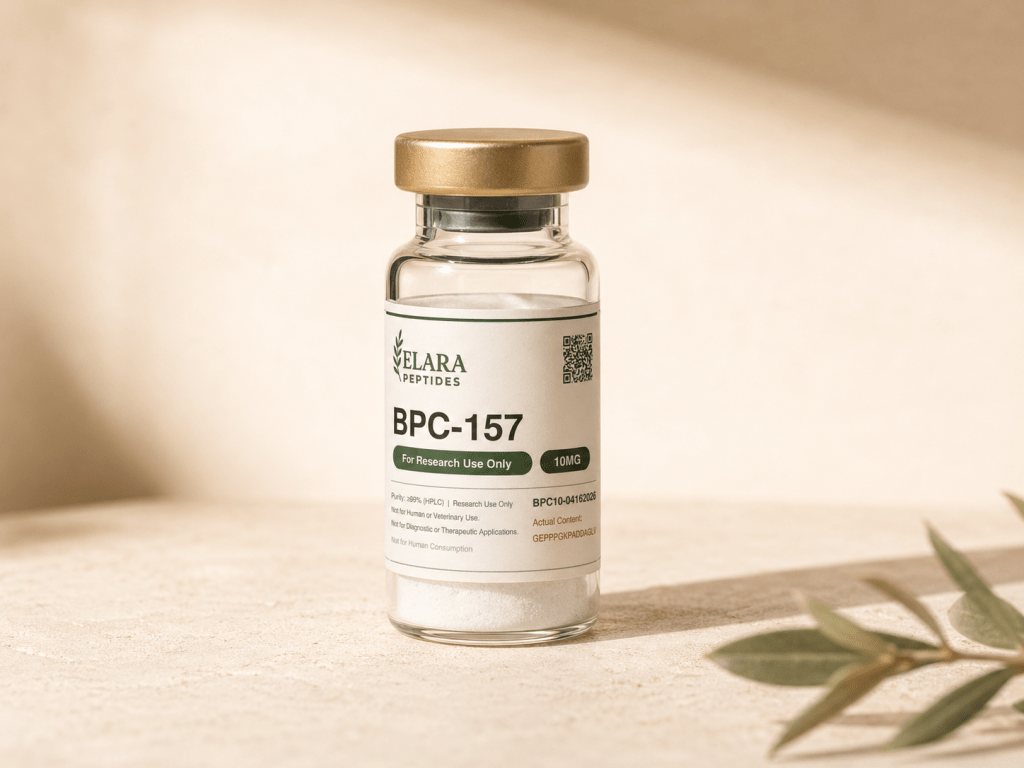
BPC-157 is a 15-amino-acid pentadecapeptide derived from a partial sequence of body protection compound, a protein originally isolated from human gastric juice in the early 1990s by researchers studying gastric mucosal defense mechanisms. The acronym BPC stands for Body Protection Compound — a name that reflects both its tissue origin and its first-identified property in gastrointestinal research. Since its initial characterization three decades ago, BPC-157 has become one of the most extensively studied synthetic peptides in regenerative biology research, with hundreds of papers published across journals in pharmacology, gastroenterology, orthopedic medicine, vascular research, and neuroscience.
It is sold for laboratory and analytical research only and is not approved by the U.S. Food and Drug Administration for any therapeutic indication.
The full sequence of BPC-157 is Gly-Glu-Pro-Pro-Pro-Gly-Lys-Pro-Ala-Asp-Asp-Ala-Gly-Leu-Val, with a molecular formula of C62H98N16O22 and a molecular weight of approximately 1,419.5 Daltons. One of the more notable structural characteristics in the published literature is the compound's unusual stability in human gastric juice — researchers have reported that BPC-157 remains structurally intact for extended periods in acidic gastric environments, a property uncommon among small peptides. This proteolytic resistance has made the compound a particular subject of interest for researchers investigating bioavailability across multiple administration routes.
The lyophilized (freeze-dried) form supplied for research is stable at -20°C for up to 24 months when sealed and protected from moisture. Following reconstitution with bacteriostatic water, the compound retains research-grade integrity for approximately 30 days when refrigerated at 2–8°C and protected from light. Repeated freeze-thaw cycles are not recommended, as peptide degradation can occur and impact the reproducibility of experimental results.
The mechanisms by which BPC-157 produces its observed effects have been the subject of substantial investigation across animal models, in vitro human cell cultures, and a growing number of human tissue studies. Each of the pathways described below is conserved between rodents and humans and active in human disease processes.
Vascular endothelial growth factor (VEGF) and angiogenesis. Multiple research groups have documented BPC-157-associated upregulation of VEGF expression and increased capillary formation. Critically, this work includes studies in human umbilical vein endothelial cells (HUVECs) — a standard model for human vascular biology — where BPC-157 has been shown to stimulate cell migration, tubular network formation, and proliferation. VEGF-driven angiogenesis is the same pathway central to wound healing in human medicine and to the pathophysiology of conditions ranging from diabetic ulcers to post-surgical recovery. Insufficient angiogenesis is recognized as a rate-limiting factor in human tissue repair, particularly in patients with diabetes, vascular disease, or compromised circulation.
Nitric oxide (NO) system modulation. BPC-157 has been studied extensively for its interactions with the L-arginine/NO pathway, which governs vascular tone and endothelial function in humans. Research has examined how the compound may influence blood flow restoration in ischemia-reperfusion injury — the same mechanism that determines outcomes in human stroke, myocardial infarction, and peripheral arterial disease. Endothelial dysfunction driven by NO pathway disruption is a documented contributor to cardiovascular disease in humans, making this an actively researched intersection.
Growth hormone receptor expression. Research published in PLOS ONE and other peer-reviewed journals has documented that BPC-157 increases growth hormone receptor expression in tendon fibroblasts. This work has been replicated in human-derived tendon fibroblast cultures, where BPC-157 has been shown to enhance proliferation and migration of human tenocytes. Growth hormone signaling is a primary driver of connective tissue maintenance in humans, and impaired GH-receptor expression is implicated in the slow tendon healing observed in aging and diabetic populations.
Pro-inflammatory cytokine modulation. BPC-157 has been studied for its effects on interleukin and TNF-alpha expression in inflammation models, with research groups reporting attenuation of pro-inflammatory cytokine cascades. These are the exact pathways targeted by major human therapeutics: anti-TNF biologics (Humira, Remicade) for rheumatoid arthritis and inflammatory bowel disease, and IL-6 inhibitors for autoimmune conditions. Research into compounds that modulate these pathways through different mechanisms is a substantial area of human-relevant translational science.
Brain-gut axis interactions. A growing body of research has examined BPC-157 in the context of gut-brain signaling — a system increasingly recognized as central to human health, with documented roles in mood disorders, irritable bowel syndrome, and cognitive decline. Studies have documented effects on both gastrointestinal and neurological outcomes from the same dosing protocols, suggesting central nervous system involvement in what was once considered a primarily peripheral compound.
Dopaminergic, serotonergic, and GABAergic systems. A growing subset of literature has examined BPC-157 in the context of central nervous system pathways, including studies in MPTP-treated rodent models — the standard preclinical model for Parkinson's disease research. The dopaminergic findings have particular relevance to the substantial unmet need in human Parkinson's treatment, where neuroprotective interventions remain an active area of investigation.
The majority of published BPC-157 literature is preclinical, conducted in animal models and in vitro cultures. However, human-relevant research exists across several domains and is worth examining honestly:
Human cell culture studies. Research using human-derived cell lines — including human umbilical vein endothelial cells, human tendon fibroblasts, human gastric epithelial cells, and human colonic epithelial cells — has been published examining BPC-157's effects on cell migration, proliferation, gene expression, and inflammatory marker production. These studies provide the most direct evidence available for how the compound interacts with human cellular machinery.
Limited human clinical pilot research. A small number of pilot studies have examined BPC-157 in human subjects, primarily in dental and periodontal research and in early gastrointestinal investigations. The clinical literature is preliminary, often involves small subject numbers, and has not been replicated in large randomized controlled trials. These studies should be interpreted as hypothesis-generating rather than as evidence of clinical efficacy.
Translational research areas with substantial human relevance. Several research domains have generated extensive published BPC-157 literature in animal models that map directly to unresolved problems in human medicine:
The translation of preclinical findings to clinical human outcomes requires controlled clinical trials, which for BPC-157 remain limited in number and scope. Researchers evaluating BPC-157 should consult primary literature directly and apply scientific scrutiny to claims that exceed what published human data supports.
Every batch of BPC-157 supplied by Elara is independently analyzed by a third-party laboratory before release. Our Certificate of Analysis documents two distinct verification measures:
HPLC purity (≥99%). High-performance liquid chromatography separates the synthesized peptide from any synthesis-related impurities, truncation sequences, or degradation products. Our specification requires a minimum 99% purity at the main peak, with documented retention time and peak area integration. Anything below specification is rejected and does not ship.
Mass spectrometry identity confirmation. MS analysis confirms that the molecular weight of the peak compound matches the theoretical molecular weight of BPC-157 (~1,419.5 Da), verifying both structural identity and the absence of significant mass-shift modifications. This confirms what's in the vial is what the label says — the foundational requirement for any reproducible research.
The COA accompanies every shipment and is also available for download on this product page.
For laboratory research applications, BPC-157 is typically reconstituted using bacteriostatic water (0.9% benzyl alcohol). Standard practice involves slow addition of solvent along the inside wall of the vial — never directly onto the lyophilized powder, which can cause aggregation and reduce solubility. The vial is then gently swirled (not shaken or vortexed) until the peptide is fully dissolved.
Once reconstituted, the solution should be stored at 2–8°C, protected from light, and used within 30 days for optimal molecular integrity. Sterile technique is essential during all handling steps. Researchers performing in vitro work or animal model studies should refer to their institution's IACUC protocols and standard handling guidelines specific to their experimental design.
What is BPC-157 derived from?
BPC-157 is a synthetic peptide consisting of 15 amino acids whose sequence corresponds to a partial fragment of body protection compound, a protein originally identified in human gastric juice. The compound supplied for research is produced via solid-phase peptide synthesis, not extracted from biological sources.
Has BPC-157 been studied in humans?
Yes, but the human clinical literature is limited. Most BPC-157 research is preclinical — animal models and in vitro studies, including extensive work in human-derived cell cultures (endothelial cells, tendon fibroblasts, gastric and colonic epithelial cells). A small number of human pilot studies have been published, primarily in dental, periodontal, and early gastrointestinal research, but these involve small subject numbers and have not been replicated in large randomized controlled trials. The compound is not FDA-approved for any therapeutic indication. Researchers should consult primary literature for the most current human clinical status.
How is BPC-157 different from TB-500?
The two compounds are biochemically distinct and operate via different mechanisms. TB-500 (a synthetic fragment of thymosin beta-4) has been studied primarily for actin-binding and cell migration effects. BPC-157 has been studied for VEGF, NO, and growth hormone receptor pathway interactions. The two are frequently co-administered in research protocols studying compound mechanisms in combination — a pairing referenced in the research community as the Wolverine Blend (BPC-157 + TB-500).
What does HPLC ≥99% purity actually mean?
High-performance liquid chromatography is the analytical standard for assessing peptide purity. A specification of ≥99% indicates that, of all UV-detectable species in the analyzed sample, at least 99% of the integrated peak area corresponds to the target compound. The remaining ≤1% represents synthesis-related impurities or trace solvent residues. Below 99% means the vial contains meaningful quantities of unidentified compounds, which compromise research reproducibility.
How long is BPC-157 stable after reconstitution?
Reconstituted BPC-157 retains research-grade integrity for approximately 30 days when stored refrigerated at 2–8°C and protected from light. Avoid freeze-thaw cycles, which accelerate degradation. Lyophilized (unreconstituted) BPC-157 is stable at -20°C for up to 24 months when properly sealed.
What human pathways does BPC-157 research target?
The most-studied pathways with direct human clinical relevance include VEGF-driven angiogenesis (central to wound healing and vascular medicine), nitric oxide signaling (central to cardiovascular function), growth hormone receptor expression (central to connective tissue maintenance), and pro-inflammatory cytokine cascades including TNF-alpha and the interleukin family (the same pathways targeted by major human biologics for autoimmune disease).
Can BPC-157 be combined with other peptides in research protocols?
Combination protocols are common in preclinical literature. The most frequently studied combination is BPC-157 with TB-500, examined for hypothesized synergistic effects in tissue repair research. Other combinations studied in the literature include BPC-157 with growth hormone secretagogues for tendon and bone healing models. Researchers should consult primary literature for compound interaction data relevant to their specific experimental design.
Does Elara test every batch?
Yes. Every production batch of BPC-157 receives independent third-party HPLC and mass spectrometry analysis before release. Batches that do not meet our 99% purity specification are rejected. The COA documenting analytical results for the specific batch you receive is included with every shipment and available for download above.
| BOTTLE DOSE | BPC-157 10mg, BPC-157 5mg |
| Purity | =99% (HPLC verified) |
| Form | Lyophilized (freeze-dried) powder |
| Testing | Independent HPLC, mass spectrometry, endotoxin |
| Documentation | Batch-matched Certificate of Analysis |
| SKU | BPC157 |
Proper storage is essential to maintain peptide integrity and maximize shelf life. Follow these guidelines for best results in your research workflow.
15% off · first order
Get 15% off your first order, plus batch notes and new-compound releases. No noise.
Research use only. Unsubscribe anytime.
You're in
Also sent to your inbox. Apply it at checkout.
WELCOME15


Reviews
There are no reviews yet.