Recovery & Repair Research
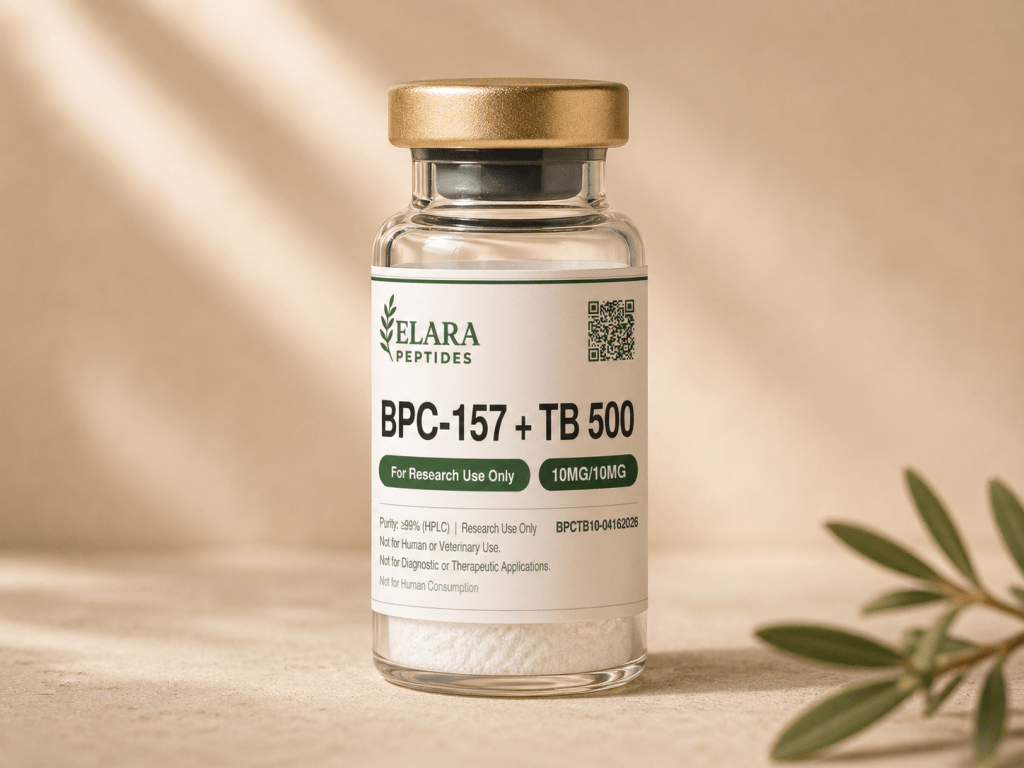
BPC-157 + TB-500 (Wolverine Blend)
From Price range: $209.00 through $239.00
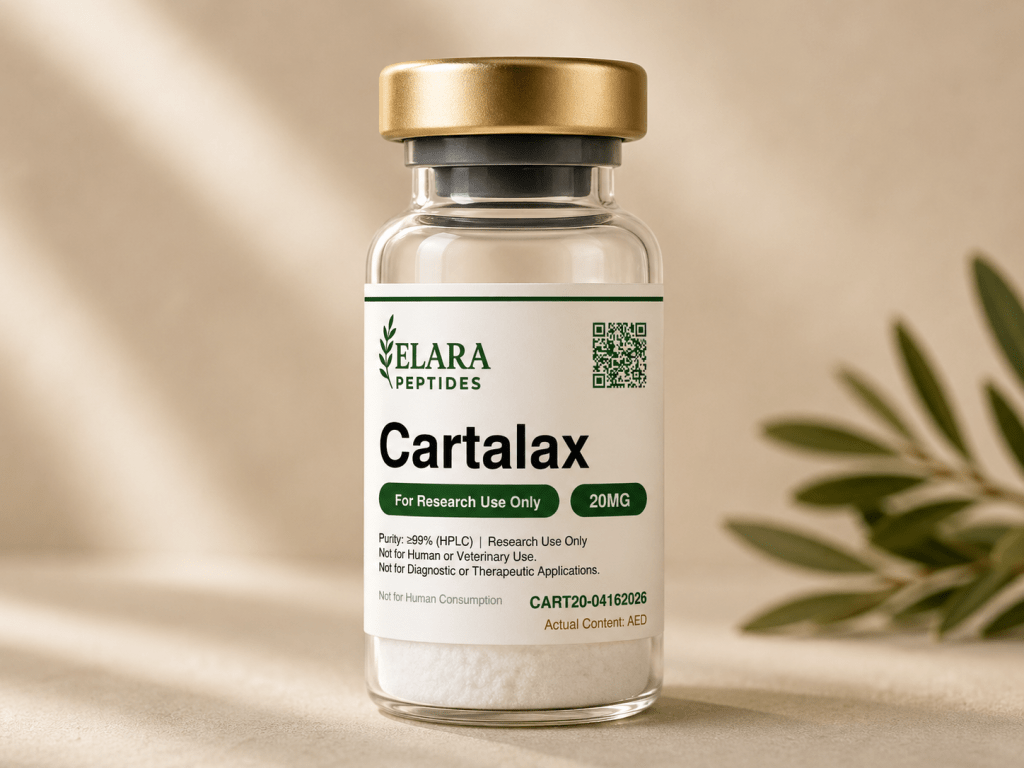
Cartalax is a synthetic tripeptide composed of the amino acid sequence Ala-Glu-Asp (AED), developed by Vladimir Khavinson and colleagues at the St. Petersburg Institute of Bioregulation and Gerontology. It is part of the Khavinson family of "short bioregulator peptides" — synthetic peptides derived from natural peptide bioregulators identified in animal tissue extracts. Cartalax was specifically designed for cartilage and connective tissue applications, with research focused on chondrocyte function, cartilage matrix biology, and joint health. It shares the structural and conceptual framework with other Khavinson peptides including Epithalon (AEDG), Pinealon, and several other tissue-specific bioregulators developed at the same Russian institute.
It is sold for laboratory and analytical research only and is not approved by the U.S. Food and Drug Administration for any therapeutic indication.
Cartalax is a tripeptide with the sequence Ala-Glu-Asp (AED), molecular formula C12H19N3O7, and molecular weight of approximately 317.3 Daltons. The three-amino-acid structure follows the design pattern of the Khavinson short peptide family — small, defined sequences derived from larger natural bioregulator peptides found in animal tissue extracts. The hypothesis underlying the Khavinson approach is that these short fragments retain tissue-specific bioregulatory activity from their parent compounds while being more reproducible and analytically tractable than the complex tissue extracts they were derived from.
The lyophilized (freeze-dried) form supplied for research is stable at -20°C for up to 24 months when sealed and protected from moisture. Following reconstitution with bacteriostatic water, the compound retains research-grade integrity for approximately 30 days when refrigerated at 2–8°C and protected from light. Repeated freeze-thaw cycles should be avoided.
Cartalax research has focused on cartilage and connective tissue contexts, with documented effects on chondrocyte function, extracellular matrix biology, and inflammatory pathways relevant to joint health.
Chondrocyte function. Chondrocytes are the resident cells of cartilage tissue, responsible for maintaining the cartilage matrix that gives joint cartilage its mechanical properties. Research has documented Cartalax-associated effects on chondrocyte proliferation, gene expression, and matrix synthesis. Chondrocyte dysfunction is central to osteoarthritis pathophysiology in human medicine, where progressive cartilage breakdown produces joint pain and disability.
Cartilage matrix synthesis. Research has examined effects on collagen type II (the predominant cartilage collagen), aggrecan (the major cartilage proteoglycan), and other extracellular matrix components. Cartilage matrix degradation outpacing synthesis is a defining feature of osteoarthritis, making research into compounds that may shift this balance directly relevant to one of the largest unmet medical needs in human orthopedic medicine.
Anti-inflammatory effects in joint tissue. Research has examined Cartalax effects on inflammatory cytokine expression in cartilage and synovial tissue. Joint inflammation contributes to cartilage breakdown in osteoarthritis and is a primary feature of inflammatory arthritis (rheumatoid arthritis, psoriatic arthritis), making anti-inflammatory mechanisms in joint tissue clinically relevant.
Gene expression modulation. Like other Khavinson short peptides, Cartalax research has examined effects on gene expression patterns in target tissues. The Khavinson research program has hypothesized that these short peptides interact with DNA or chromatin to modulate gene expression in tissue-specific patterns — though the specific mechanisms underlying tissue specificity remain incompletely characterized in Western research.
Apoptosis regulation. Research has examined effects on programmed cell death pathways in chondrocytes, with relevance to chondrocyte loss in osteoarthritis where excessive chondrocyte apoptosis contributes to cartilage thinning.
Cartalax research, like much of the Khavinson short peptide literature, is published primarily in Russian-language journals from the St. Petersburg research program and collaborating institutions. Western researchers have only recently begun engaging systematically with this literature, and English-language publications remain limited.
Russian clinical research. The Khavinson group and collaborators have published clinical research on Cartalax in joint health and connective tissue contexts, including studies in elderly subjects with degenerative joint conditions. The research methodology and outcomes are documented in Russian-language journals, with limited Western replication.
Cell culture research. Studies in human chondrocyte cultures and connective tissue cells have documented effects on cell viability, gene expression, and matrix production. These cell culture findings provide direct evidence for how the compound interacts with human cartilage cells.
Translational research areas with substantial human clinical relevance:
Researchers evaluating Cartalax should be aware of the unusual research history. The Russian-language literature is substantial but underrepresented in standard Western databases like PubMed. Some methodological criticisms have been raised about specific Khavinson-program studies, and replication of key findings in independent Western research programs has been limited. Researchers should consult primary literature directly and apply scientific scrutiny to claims that exceed what published data supports.
Every batch of Cartalax supplied by Elara is independently analyzed by a third-party laboratory before release. Our Certificate of Analysis documents two distinct verification measures:
HPLC purity (≥99%). High-performance liquid chromatography separates the synthesized tripeptide from synthesis-related impurities, truncation sequences, and degradation products. Our specification requires a minimum 99% purity at the main peak. For a small tripeptide, achieving high purity is more straightforward than for larger peptides, but verification still confirms the correct AED sequence is supplied.
Mass spectrometry identity confirmation. MS analysis confirms that the molecular weight of the peak compound matches the theoretical molecular weight of Cartalax (~317.3 Da), verifying both structural identity and the correct Ala-Glu-Asp sequence.
The COA accompanies every shipment and is also available for download on this product page.
For laboratory research applications, Cartalax is typically reconstituted using bacteriostatic water (0.9% benzyl alcohol). Standard practice involves slow addition of solvent along the inside wall of the vial — never directly onto the lyophilized powder, which can cause aggregation. The vial is then gently swirled (not shaken or vortexed) until the peptide is fully dissolved.
Once reconstituted, the solution should be stored at 2–8°C, protected from light, and used within 30 days for optimal molecular integrity. Sterile technique is essential during all handling steps. Researchers performing in vitro work or animal model studies should refer to their institution's IACUC protocols and standard handling guidelines specific to their experimental design.
What is Cartalax?
Cartalax is a synthetic tripeptide (sequence Ala-Glu-Asp, abbreviated AED) developed by Vladimir Khavinson and colleagues at the St. Petersburg Institute of Bioregulation and Gerontology as part of the Khavinson short bioregulator peptide family. It was designed specifically for cartilage and connective tissue applications and has been studied in joint health and chondrocyte biology contexts.
What does AED mean?
AED is the single-letter amino acid abbreviation for Cartalax's sequence: Alanine (A), Glutamic acid (E), Aspartic acid (D). The "Actual Content: AED" notation on the product label provides this sequence for verification by researchers familiar with the compound.
How is Cartalax related to Epithalon?
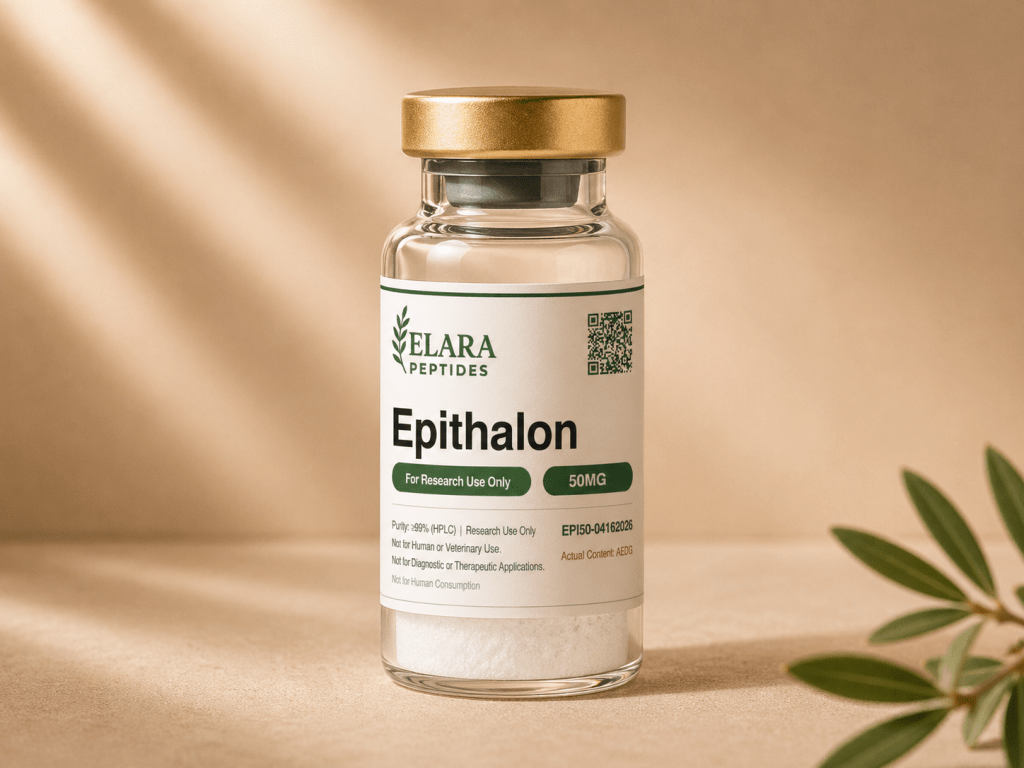
Both compounds are part of the Khavinson short bioregulator peptide family developed at the St. Petersburg Institute of Bioregulation and Gerontology. Epithalon is a tetrapeptide (AEDG) targeting pineal gland and aging research; Cartalax is a tripeptide (AED) targeting cartilage and connective tissue research. The compounds share three amino acids (AED) with Epithalon having an additional glycine (G) at the C-terminus. The Khavinson research program developed multiple tissue-specific short peptides following a similar design pattern.
Has Cartalax been studied in humans?
Cartalax has been studied by the Khavinson group and collaborators with publications primarily in Russian-language journals. Human cell culture research has documented effects in chondrocyte and connective tissue cell systems. Western clinical replication is limited, similar to the situation with other Khavinson family compounds. Researchers should consult primary literature directly and apply scientific scrutiny.
What is the Khavinson short peptide family?
The Khavinson short peptide family refers to a series of short synthetic peptides (typically 2–4 amino acids) developed by Vladimir Khavinson's research group at the St. Petersburg Institute of Bioregulation and Gerontology. The compounds were derived from natural peptide bioregulators identified in animal tissue extracts, with the hypothesis that short fragments retain tissue-specific bioregulatory activity. The family includes Epithalon (AEDG), Cartalax (AED), Pinealon, and several other tissue-targeted compounds.
What does HPLC ≥99% purity actually mean?
High-performance liquid chromatography is the analytical standard for assessing peptide purity. A specification of ≥99% indicates that, of all UV-detectable species in the analyzed sample, at least 99% of the integrated peak area corresponds to the target compound. For Cartalax's small tripeptide structure, achieving high purity is straightforward, with verification confirming the correct AED sequence is supplied.
How long is Cartalax stable after reconstitution?
Reconstituted Cartalax retains research-grade integrity for approximately 30 days when stored refrigerated at 2–8°C and protected from light. Avoid freeze-thaw cycles. Lyophilized (unreconstituted) Cartalax is stable at -20°C for up to 24 months when properly sealed.
What human pathways does Cartalax research target?
The most-studied pathways with direct human clinical relevance include chondrocyte function and viability, cartilage extracellular matrix synthesis (collagen type II and aggrecan), inflammatory pathways in joint tissue, gene expression in connective tissue cells, and broader research into tissue-specific bioregulator peptide biology.
Does Elara test every batch?
Yes. Every production batch of Cartalax receives independent third-party HPLC and mass spectrometry analysis before release. Batches that do not meet our 99% purity specification are rejected. The COA documenting analytical results for the specific batch you receive is included with every shipment and available for download above.
| Purity | =99% (HPLC verified) |
| Form | Lyophilized (freeze-dried) powder |
| Testing | Independent HPLC, mass spectrometry, endotoxin |
| Documentation | Batch-matched Certificate of Analysis |
| SKU | CARTALAX |
Proper storage is essential to maintain peptide integrity and maximize shelf life. Follow these guidelines for best results in your research workflow.
15% off · first order
Get 15% off your first order, plus batch notes and new-compound releases. No noise.
Research use only. Unsubscribe anytime.
You're in
Also sent to your inbox. Apply it at checkout.
WELCOME15

Reviews
There are no reviews yet.