Cellular Energy Research
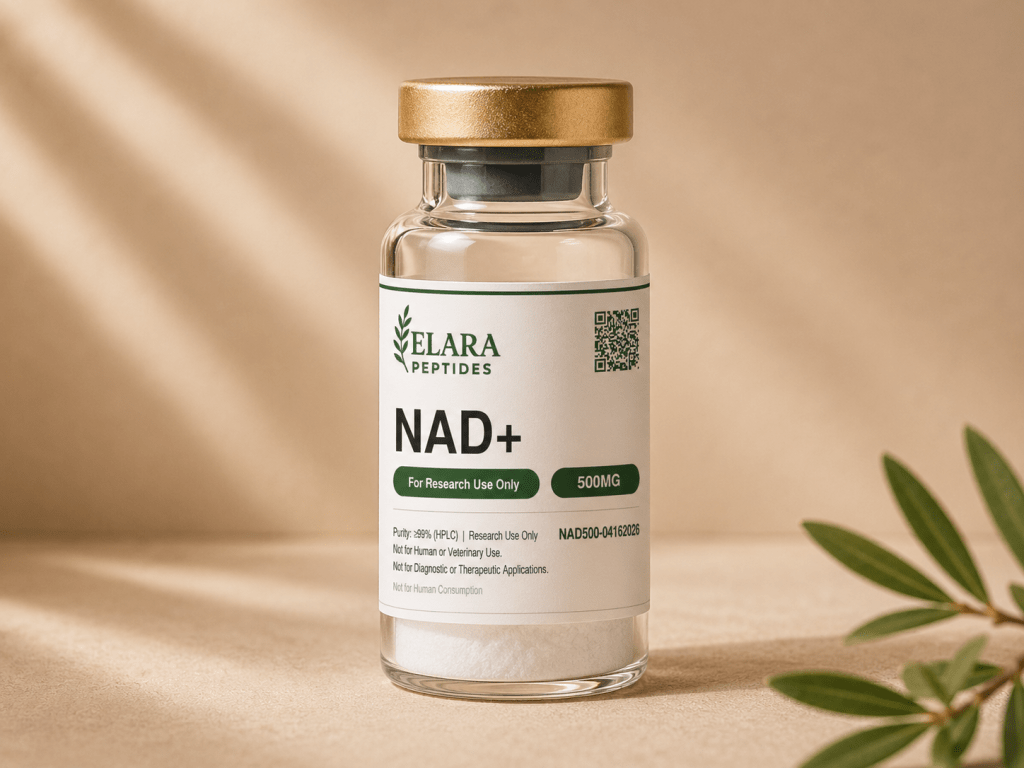
NAD+ 500mg
$249.00
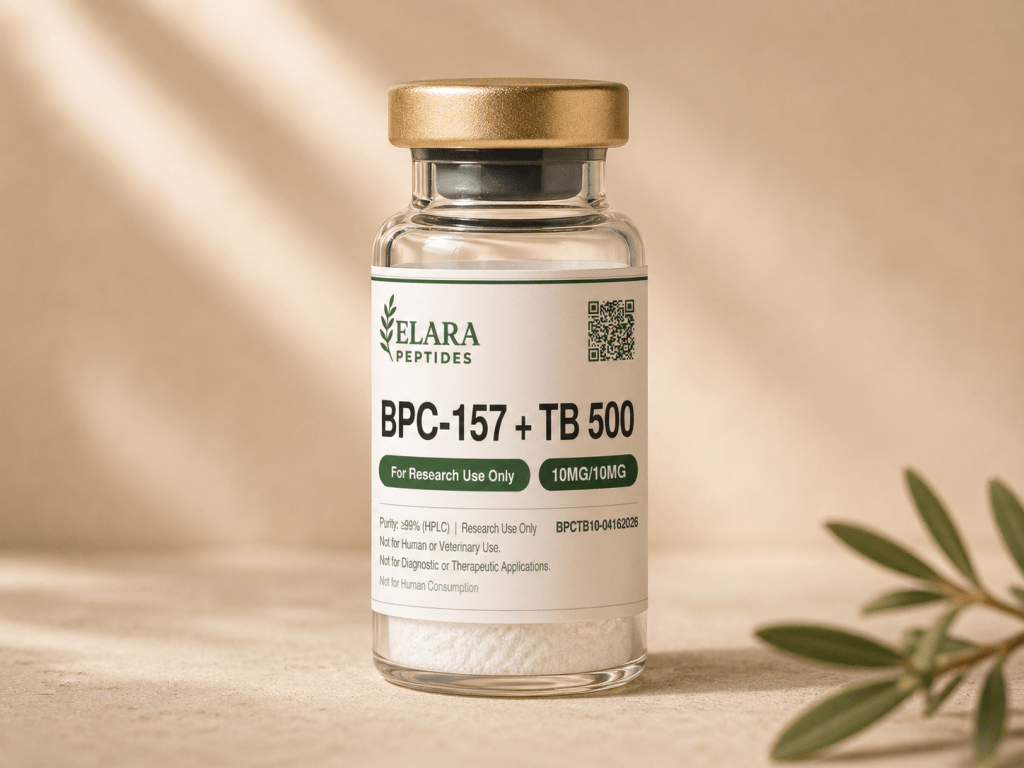
Wolverine Blend (BPC-157 + TB-500) is a combination research peptide preparation containing two of the most extensively studied tissue repair compounds in regenerative biology research: BPC-157, a 15-amino-acid pentadecapeptide derived from body protection compound, and TB-500 (also known as TB4-frag), a synthetic fragment of the naturally occurring protein thymosin beta-4. The combination is widely referenced in the research community as the "Wolverine Blend" — a name that has emerged organically in the literature and research community in reference to the compounds' studied effects on tissue regeneration. Each vial supplied by Elara contains 10mg of BPC-157 and 10mg of TB-500 in lyophilized form.
It is sold for laboratory and analytical research only and is not approved by the U.S. Food and Drug Administration for any therapeutic indication.
The pharmacological rationale for studying BPC-157 and TB-500 in combination is based on their distinct, complementary mechanisms of action. Tissue repair is a multi-stage biological process — broadly involving angiogenesis (formation of new blood vessels), cell migration (movement of repair cells into damaged tissue), proliferation (multiplication of structural cells), and remodeling (organization of new tissue architecture). BPC-157 and TB-500 have been studied for effects on different stages of this cascade, which has driven research interest in whether their effects are additive or synergistic when combined.
BPC-157's primary studied pathways: vascular endothelial growth factor (VEGF) upregulation and angiogenesis, growth hormone receptor expression in fibroblasts, nitric oxide system modulation, and pro-inflammatory cytokine attenuation. The angiogenesis-driving and growth-hormone-receptor effects in particular position BPC-157 as a compound studied for its role in establishing the blood supply and growth factor signaling environment necessary for tissue repair.
TB-500's primary studied pathways: actin sequestration and polymerization (the cytoskeletal dynamics that drive cell shape change and migration), cell migration of multiple repair cell types including endothelial cells, keratinocytes, and stem cells, and effects on tissue inflammation. TB-500 has been studied particularly for its role in mobilizing repair cells from circulation and driving their migration into damaged tissue.
The combined mechanistic hypothesis. Researchers studying these compounds in combination have proposed that BPC-157 establishes the vascular and growth factor environment needed for repair while TB-500 mobilizes and migrates the cellular machinery into that environment. This combination of "build the infrastructure" (BPC-157) plus "deliver the workforce" (TB-500) is the conceptual frame underlying the research interest in the blend. Whether the combination produces genuinely synergistic effects beyond simple additivity remains an active research question, with most published work to date examining the compounds individually rather than in combination.
BPC-157 is a 15-amino-acid pentadecapeptide (sequence: Gly-Glu-Pro-Pro-Pro-Gly-Lys-Pro-Ala-Asp-Asp-Ala-Gly-Leu-Val) originally isolated from human gastric juice in the early 1990s. The compound has been studied across hundreds of published papers for effects on:
TB-500 is a synthetic peptide based on a fragment of thymosin beta-4 (Tβ4), one of the most abundant proteins in human and animal cells. Thymosin beta-4 is a 43-amino-acid protein with extensive documented roles in cellular biology; TB-500 typically refers to a shortened active fragment of the parent molecule. The compound has been studied for effects on:
The combined Wolverine Blend has been examined less extensively in published research than each compound individually, but the individual research literatures intersect at several human-relevant domains:
Tendon, ligament, and soft tissue repair. Both compounds have separate research literatures examining tendon and ligament injury models — rotator cuff injury, Achilles tendinopathy, ACL reconstruction recovery. These are significant human medical burdens with limited pharmacological intervention options. The combination is hypothesized to address both the angiogenic (BPC-157) and cell-migration (TB-500) requirements of connective tissue regeneration simultaneously.
Wound healing. Diabetic and chronic wound healing represents one of the largest unmet needs in human medicine, particularly in patients with vascular disease, diabetes, or compromised circulation. The combined mechanistic profile of BPC-157 (angiogenesis) plus TB-500 (cell migration into wound bed) maps directly to the rate-limiting biological steps in human wound healing.
Cardiac repair models. Both compounds have separate literatures examining post-myocardial infarction repair models. The clinical context — limited human therapeutic options for established cardiac damage beyond the acute treatment window — drives substantial translational research interest.
Skin and hair research. TB-500's documented effects on keratinocyte migration and hair follicle biology, combined with BPC-157's effects on dermal angiogenesis, position the combination for research interest in dermatological and aesthetic medicine contexts.
The translation of preclinical findings on either compound — and especially on the combination — to clinical human outcomes requires controlled clinical trials, which remain limited. Researchers should consult primary literature for the most current research status and apply scientific scrutiny to claims that exceed what published human data supports.
Every batch of Wolverine Blend supplied by Elara is independently analyzed by a third-party laboratory before release. Our Certificate of Analysis documents two distinct verification measures for each compound in the blend:
HPLC purity (≥99%). High-performance liquid chromatography separates each synthesized peptide from synthesis-related impurities, truncation sequences, and degradation products. Our specification requires a minimum 99% purity for both BPC-157 and TB-500 components. Combination preparations require particularly rigorous purity verification because impurities from either component compound can confound research applications.
Mass spectrometry identity confirmation. MS analysis confirms that the molecular weights of both peak compounds match the theoretical molecular weights of BPC-157 (~1,419.5 Da) and TB-500 (~890 Da for the typical Ac-LKKTETQ fragment supplied for research applications). This confirms what's in the vial is what the label says — the foundational requirement for any reproducible research using a combination preparation.
The COA accompanies every shipment and is also available for download on this product page.
For laboratory research applications, Wolverine Blend is typically reconstituted using bacteriostatic water (0.9% benzyl alcohol). Standard practice involves slow addition of solvent along the inside wall of the vial — never directly onto the lyophilized powder, which can cause aggregation. The vial is then gently swirled (not shaken or vortexed) until both peptides are fully dissolved.
Once reconstituted, the solution should be stored at 2–8°C, protected from light, and used within 30 days for optimal molecular integrity. Sterile technique is essential during all handling steps. Researchers performing in vitro work or animal model studies should refer to their institution's IACUC protocols and standard handling guidelines specific to their experimental design.
What is the Wolverine Blend?
Wolverine Blend is a combination preparation of two research peptides — BPC-157 (10mg) and TB-500 (10mg) — supplied in a single lyophilized vial. The name has emerged in the research community in reference to the compounds' studied effects on tissue regeneration. The blend allows researchers to study both compounds in combination without separately reconstituting two vials.
Why are BPC-157 and TB-500 studied together?
The two compounds have complementary, non-overlapping mechanisms in tissue repair research. BPC-157 has been studied primarily for VEGF-driven angiogenesis and growth hormone receptor pathway effects. TB-500 has been studied primarily for actin polymerization and cell migration effects. The combined mechanistic profile hypothesizes that BPC-157 establishes the vascular and growth factor environment needed for repair while TB-500 mobilizes and migrates cellular repair machinery into that environment.
Has the combination been studied in humans?
Both compounds individually have human cell culture research and limited human pilot studies, but the combination specifically has been examined less extensively in published literature than either compound alone. Most combination research to date is preclinical. Researchers should consult primary literature for the most current human clinical status.
What does HPLC ≥99% purity actually mean for a combination?
For a combination preparation, our specification requires that both BPC-157 and TB-500 components individually meet 99%+ purity by HPLC analysis. Synthesis impurities for either compound can confound combination research, so each component is verified independently before the blend is prepared.
How long is Wolverine Blend stable after reconstitution?
Reconstituted Wolverine Blend retains research-grade integrity for approximately 30 days when stored refrigerated at 2–8°C and protected from light. Avoid freeze-thaw cycles. Lyophilized (unreconstituted) blend is stable at -20°C for up to 24 months when properly sealed.
What human pathways does Wolverine Blend research target?
The combined research literature spans VEGF-driven angiogenesis, growth hormone receptor expression, actin cytoskeleton dynamics, cell migration of repair cells, nitric oxide signaling, and inflammatory cytokine modulation — all pathways central to human tissue repair, wound healing, and connective tissue maintenance.
Why is it called Wolverine Blend?
The name has emerged organically in the research and biohacking communities in reference to the compounds' studied effects on tissue repair and regeneration. While not a scientific designation, the term has become widely used in industry references to BPC-157 + TB-500 combinations and is preserved here for recognition.
Does Elara test every batch?
Yes. Every production batch of Wolverine Blend receives independent third-party HPLC and mass spectrometry analysis for both BPC-157 and TB-500 components before release. Batches that do not meet the 99% purity specification for either compound are rejected. The COA documenting analytical results for the specific batch you receive is included with every shipment and available for download above.
| Size: | BPC-157 10mg+TB-500 10mg, BPC-157 5mg+TB-500 5mg |
| Purity | =99% (HPLC verified) |
| Form | Lyophilized (freeze-dried) powder |
| Testing | Independent HPLC, mass spectrometry, endotoxin |
| Documentation | Batch-matched Certificate of Analysis |
| SKU | BPCTB |
Proper storage is essential to maintain peptide integrity and maximize shelf life. Follow these guidelines for best results in your research workflow.
15% off · first order
Get 15% off your first order, plus batch notes and new-compound releases. No noise.
Research use only. Unsubscribe anytime.
You're in
Also sent to your inbox. Apply it at checkout.
WELCOME15


Reviews
There are no reviews yet.