
Growth Hormone Research
IGF-1 LR3 1mg
$129.00
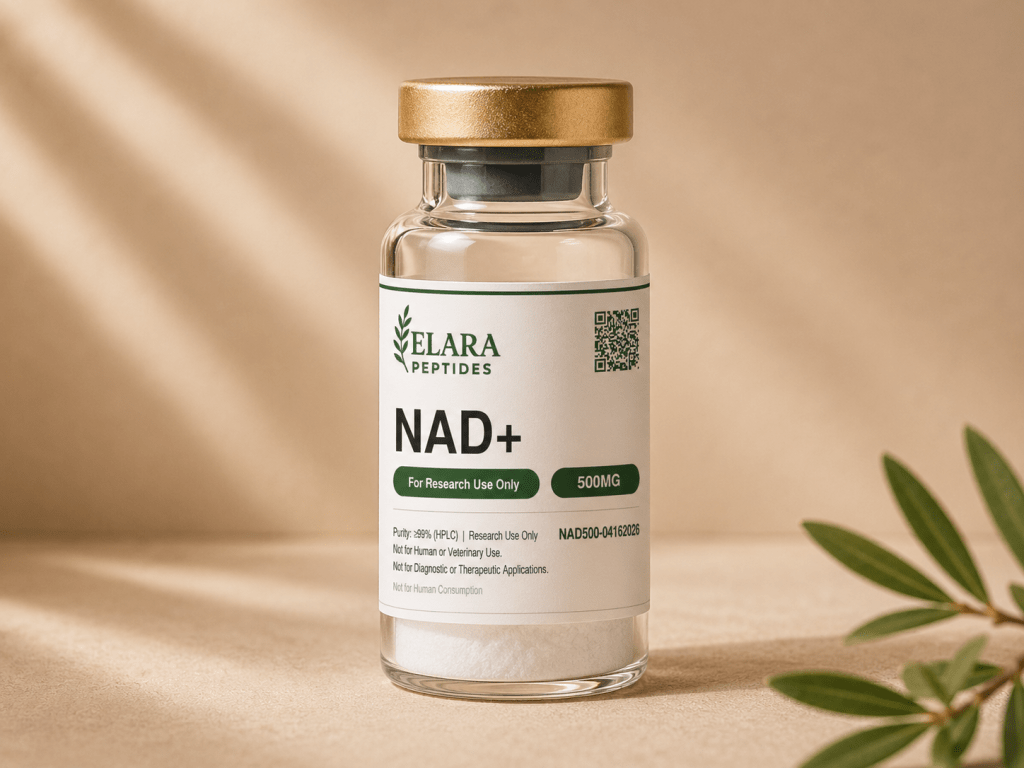
NAD+ (nicotinamide adenine dinucleotide) is a foundational coenzyme present in every living cell. It plays a central role in cellular energy metabolism, DNA repair, and the regulation of longevity-associated enzymes called sirtuins. Unlike peptide compounds, NAD+ is a small molecule — a dinucleotide formed from two nucleotides joined through their phosphate groups. Endogenous NAD+ levels in human tissues decline progressively with age, and this decline has been linked in published research to multiple age-associated cellular changes including reduced mitochondrial function, impaired DNA repair, and altered metabolic homeostasis. NAD+ is one of the most extensively studied compounds in modern longevity and cellular aging research.
It is sold for laboratory and analytical research only and is not approved by the U.S. Food and Drug Administration for any therapeutic indication.
NAD+ is a dinucleotide composed of two nucleotides — nicotinamide mononucleotide (NMN) and adenosine monophosphate (AMP) — joined through their phosphate groups. Its molecular formula is C21H27N7O14P2 with a molecular weight of approximately 663.4 Daltons in its free acid form. The "+" designation refers to the oxidized form of the molecule; its reduced counterpart, NADH, is structurally similar but carries an additional hydrogen atom. Both forms are interconverted continuously in living cells and represent the primary electron carrier in cellular metabolism.
The lyophilized (freeze-dried) form supplied for research is stable at -20°C for up to 24 months when sealed and protected from moisture. NAD+ is more chemically labile than peptide compounds — it is sensitive to pH, temperature, and light, and undergoes hydrolysis at the glycosidic bond under unfavorable conditions. Following reconstitution with bacteriostatic water, the compound retains research-grade integrity for approximately 30 days when refrigerated at 2–8°C and protected from light. Storage at room temperature should be minimized, and freeze-thaw cycles avoided to maintain experimental reproducibility.
NAD+ functions as a critical cofactor across multiple human cellular systems. Its biological roles span energy metabolism, DNA damage response, gene expression regulation, and cellular signaling — making it one of the most pleiotropic small molecules in cellular biology.
Cellular energy metabolism. NAD+ is the primary electron acceptor in the mitochondrial electron transport chain and a cofactor for hundreds of redox enzymes. The NAD+/NADH ratio is the central metabolic switch governing whether cells engage in energy-producing oxidative metabolism or alternative metabolic pathways. Decline in NAD+ levels with aging has been documented to impair mitochondrial function in human tissues — a finding linked to age-associated reductions in cellular energy capacity, exercise tolerance, and metabolic flexibility.
Sirtuin enzyme activation. Sirtuins are a family of seven NAD+-dependent enzymes (SIRT1 through SIRT7) that regulate gene expression, DNA repair, mitochondrial biogenesis, and metabolic pathways. Sirtuin activity requires NAD+ as a substrate, meaning sirtuin function is directly dependent on cellular NAD+ availability. Research from David Sinclair's group at Harvard, Shin-ichiro Imai's group at Washington University, and many others has documented that age-related NAD+ decline reduces sirtuin activity — a mechanism proposed to underlie multiple aging phenotypes in human tissues.
PARP-mediated DNA repair. Poly(ADP-ribose) polymerases (PARPs) are NAD+-consuming enzymes that respond to DNA damage by initiating repair pathways. PARP activation in response to DNA damage rapidly depletes cellular NAD+ — a mechanism that links DNA damage burden (which increases with age) to NAD+ availability for other cellular processes including sirtuin function. This NAD+/PARP/DNA repair axis has been a substantial area of human aging research.
CD38 and NAD+ depletion in aging. CD38 is an NAD+-consuming enzyme whose expression increases with age in human tissues, contributing to age-related NAD+ decline. Research has documented CD38 upregulation in aged human tissues and examined its role as a therapeutic target for restoring NAD+ levels — an active area of pharmacological research.
Mitochondrial biogenesis. NAD+ supports the function of PGC-1α and related transcription factors that regulate mitochondrial biogenesis — the cellular process of generating new mitochondria. Reduced mitochondrial number and function is a hallmark of aging in human tissues, and the NAD+-PGC-1α axis is one mechanism through which NAD+ levels influence cellular aging.
Inflammation and immune function. NAD+ levels modulate inflammatory pathways through effects on sirtuins, NF-κB signaling, and macrophage polarization. The "inflammaging" phenomenon — chronic low-grade inflammation associated with aging in humans — has been linked to NAD+ decline through multiple mechanistic pathways.
Circadian rhythm regulation. NAD+ levels follow a circadian rhythm in human tissues and influence the activity of clock-associated transcription factors. Disruption of NAD+ rhythmicity has been examined as a contributing factor to metabolic dysfunction and age-related circadian disturbances.
NAD+ research in humans has expanded substantially over the past decade, with multiple completed and ongoing clinical trials examining NAD+ precursors and direct supplementation across diverse conditions.
NAD+ precursor research (NMN and NR). Most human clinical research to date has focused on NAD+ precursors — particularly nicotinamide mononucleotide (NMN) and nicotinamide riboside (NR) — which are converted to NAD+ in human cells. Multiple randomized controlled trials have documented that oral NMN and NR supplementation increases blood and tissue NAD+ levels in human subjects, with effects on metabolic markers, exercise capacity, vascular function, and other outcomes. The precursor research provides indirect but extensive validation that elevating human NAD+ levels is achievable and produces measurable physiological changes.
Direct NAD+ research. Direct NAD+ administration has been studied in clinical contexts including post-operative recovery, addiction treatment (the Mestayer NAD therapy protocols and subsequent studies), neurodegenerative disease research, and chronic fatigue research. The clinical evidence base for direct NAD+ administration is smaller than for precursors but is developing.
Cardiovascular and vascular research. Human research has examined NAD+ pathway interventions in the context of vascular aging, endothelial function, and blood pressure. The findings have been generally consistent with the cellular research showing NAD+'s role in vascular biology.
Metabolic and exercise research. Multiple human trials have examined NAD+ precursor supplementation in the context of insulin sensitivity, exercise performance, and metabolic flexibility — particularly in older adults, where age-related NAD+ decline is most pronounced.
Neurological research. NAD+ pathway interventions are being studied in Parkinson's disease, Alzheimer's disease, and other neurodegenerative conditions where mitochondrial dysfunction and impaired DNA repair are recognized contributing factors. Early human pilot studies have documented effects on biomarkers of neurodegeneration.
Translational research areas with substantial human relevance:
The translation of preclinical and early clinical findings to definitive therapeutic applications remains an active area of investigation. Researchers should consult primary literature for the most current human clinical data on specific NAD+ pathway interventions.
Every batch of NAD+ supplied by Elara is independently analyzed by a third-party laboratory before release. Our Certificate of Analysis documents two distinct verification measures:
HPLC purity (≥99%). High-performance liquid chromatography separates NAD+ from synthesis-related impurities, breakdown products (including NADH, nicotinamide, and ADP-ribose), and trace contaminants. Our specification requires a minimum 99% purity at the main peak. NAD+ is more chemically labile than peptide compounds, and rigorous purity verification is particularly important because hydrolysis products can confound research applications.
Mass spectrometry identity confirmation. MS analysis confirms that the molecular weight of the peak compound matches the theoretical molecular weight of NAD+ (~663.4 Da), verifying both structural identity and the absence of significant degradation products. The mass signature distinguishes NAD+ from related compounds including NADH, NMN, and other intermediates that may share spectroscopic similarities.
The COA accompanies every shipment and is also available for download on this product page.
For laboratory research applications, NAD+ is typically reconstituted using bacteriostatic water (0.9% benzyl alcohol). Standard practice involves slow addition of solvent along the inside wall of the vial — never directly onto the lyophilized powder, which can cause aggregation. The vial is then gently swirled (not shaken or vortexed) until the compound is fully dissolved.
NAD+ is more pH- and temperature-sensitive than peptide compounds. Once reconstituted, the solution should be stored at 2–8°C, protected from light, and used within 30 days for optimal molecular integrity. Researchers should note that NAD+ undergoes hydrolysis at extremes of pH, and bacteriostatic water (slightly acidic) provides appropriate stability for short-term storage. Sterile technique is essential during all handling steps. Researchers performing in vitro work or animal model studies should refer to their institution's IACUC protocols and standard handling guidelines specific to their experimental design.
Is NAD+ a peptide?
No. NAD+ is a dinucleotide coenzyme — a small molecule composed of two nucleotides joined through their phosphate groups. It is not a peptide and does not contain amino acids. NAD+ is grouped with peptide research compounds in many supplier catalogs because it is similarly handled (lyophilized, reconstituted with bacteriostatic water, used in research applications), but its molecular class and biological mechanism are distinct.
Why does NAD+ decline with age?
Multiple mechanisms contribute to age-related NAD+ decline in human tissues. Increased CD38 enzyme expression, increased PARP activation in response to accumulating DNA damage, decreased NAD+ biosynthesis, and altered cellular metabolism all contribute. The decline begins in adulthood and accelerates with age, with elderly tissues showing significantly reduced NAD+ compared to young tissues. This decline has been linked to multiple age-associated cellular and physiological changes.
How is NAD+ different from NMN and NR?
NMN (nicotinamide mononucleotide) and NR (nicotinamide riboside) are precursors to NAD+ — they are converted to NAD+ in human cells through the salvage pathway. NAD+ is the active coenzyme used by enzymes; precursors are administered because they are more orally bioavailable and reach NAD+ pools through cellular conversion. Direct NAD+ research and precursor research provide complementary evidence about NAD+ pathway biology.
What does HPLC ≥99% purity actually mean?
High-performance liquid chromatography is the analytical standard for assessing chemical purity. A specification of ≥99% indicates that, of all UV-detectable species in the analyzed sample, at least 99% of the integrated peak area corresponds to the target compound. For NAD+ specifically, the purity specification ensures separation from related molecules including NADH, nicotinamide, and breakdown products that can confound research applications.
How long is NAD+ stable after reconstitution?
Reconstituted NAD+ retains research-grade integrity for approximately 30 days when stored refrigerated at 2–8°C and protected from light. NAD+ is more sensitive to pH and temperature than peptide compounds, so cold storage and avoidance of freeze-thaw cycles are particularly important. Lyophilized (unreconstituted) NAD+ is stable at -20°C for up to 24 months when properly sealed.
Has NAD+ been studied in humans?
Yes, extensively. Multiple completed human clinical trials have examined NAD+ precursors (NMN and NR) and direct NAD+ administration across diverse contexts including cardiovascular health, exercise capacity, metabolic function, neurodegenerative disease, and aging biology. The clinical research portfolio has expanded substantially over the past decade and continues to grow.
What human pathways does NAD+ research target?
The most-studied pathways with direct human clinical relevance include cellular energy metabolism (mitochondrial function and the NAD+/NADH ratio), sirtuin enzyme activation (regulating gene expression and DNA repair), PARP-mediated DNA damage response, CD38-mediated NAD+ depletion in aging, mitochondrial biogenesis, inflammatory pathway modulation, and circadian rhythm regulation.
Does Elara test every batch?
Yes. Every production batch of NAD+ receives independent third-party HPLC and mass spectrometry analysis before release. Batches that do not meet our 99% purity specification are rejected. The COA documenting analytical results for the specific batch you receive is included with every shipment and available for download above.
| Purity | =99% (HPLC verified) |
| Form | Lyophilized (freeze-dried) powder |
| Testing | Independent HPLC, mass spectrometry, endotoxin |
| Documentation | Batch-matched Certificate of Analysis |
| SKU | NAD |
Proper storage is essential to maintain peptide integrity and maximize shelf life. Follow these guidelines for best results in your research workflow.
15% off · first order
Get 15% off your first order, plus batch notes and new-compound releases. No noise.
Research use only. Unsubscribe anytime.
You're in
Also sent to your inbox. Apply it at checkout.
WELCOME15

Reviews
There are no reviews yet.