Skin & Beauty Research
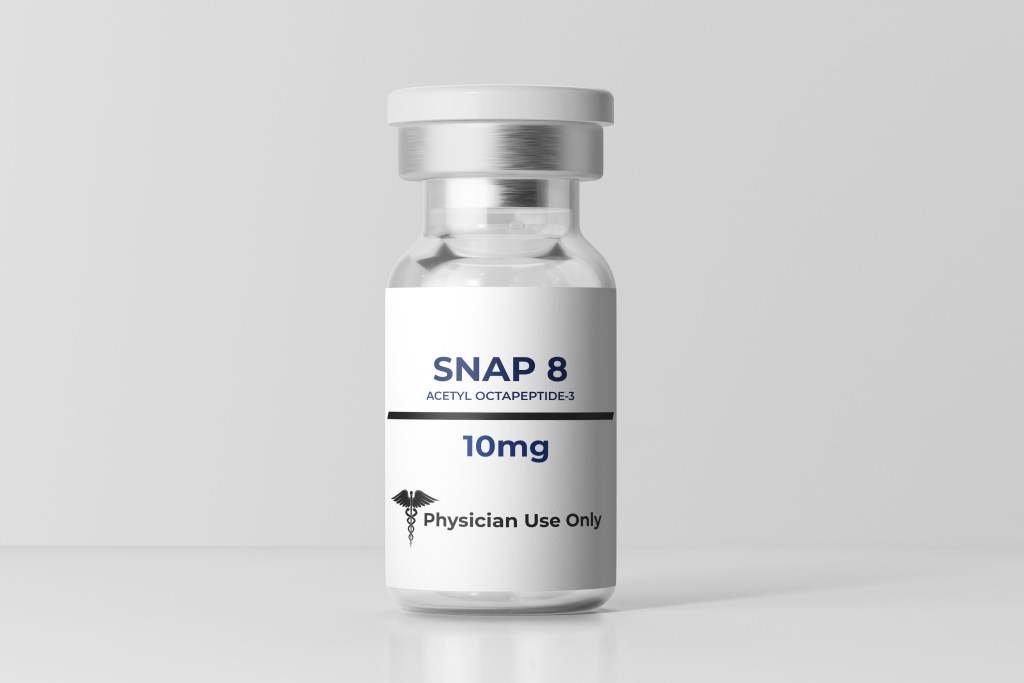
Snap-8 10mg
$139.00
In stock
Epithalon — also written as Epitalon and known by its tetrapeptide sequence Ala-Glu-Asp-Gly (AEDG) — is a synthetic four-amino-acid peptide developed by Russian gerontologist Professor Vladimir Khavinson at the St. Petersburg Institute of Bioregulation and Gerontology beginning in the 1980s. It was designed as a synthetic analog of epithalamin, a natural pineal gland extract, and is one of the few synthetic peptides with published human research suggesting effects on telomerase activity, telomere length, and biological aging markers. While the bulk of the published research is in Russian-language journals from Soviet and post-Soviet research programs, the compound has become one of the most discussed peptides in modern longevity research literature.
It is sold for laboratory and analytical research only and is not approved by the U.S. Food and Drug Administration for any therapeutic indication.
Epithalon is a tetrapeptide with the sequence Ala-Glu-Asp-Gly (alanyl-glutamyl-aspartyl-glycine), molecular formula C14H22N4O9, and molecular weight of approximately 390.4 Daltons. The four-amino-acid structure makes it one of the smallest peptides studied for systemic biological effects — small enough to potentially cross cellular and biological barriers that larger peptides cannot, and structurally derived from the active core sequence of the pineal extract epithalamin.
The lyophilized (freeze-dried) form supplied for research is stable at -20°C for up to 24 months when sealed and protected from moisture. Following reconstitution with bacteriostatic water, the compound retains research-grade integrity for approximately 30 days when refrigerated at 2–8°C and protected from light. Repeated freeze-thaw cycles should be avoided to maintain experimental reproducibility.
Epithalon's most distinctive characteristic in the published research literature is its proposed effect on telomerase enzyme activity and telomere maintenance — a mechanism with direct relevance to one of the central questions in human cellular aging.
Telomerase activation and telomere length. Telomeres are the protective caps at the ends of human chromosomes; they shorten with each cell division and are recognized as one of the molecular hallmarks of cellular aging. Telomerase is the enzyme that maintains telomere length, but in most adult human somatic cells, telomerase activity is suppressed — a key reason these cells have finite replicative capacity. Research from Khavinson's group and others has documented that Epithalon administration in human cell cultures (including human somatic cells with normally suppressed telomerase) is associated with reactivation of telomerase activity and elongation of telomeres. This research has been the central pharmacological finding distinguishing Epithalon from other peptide compounds and has driven sustained research interest over decades.
Pineal gland function and melatonin regulation. Epithalon was originally derived from epithalamin, a pineal extract, and has been studied for effects on pineal gland function and melatonin secretion. Age-related decline in pineal melatonin production is a recognized feature of human aging, and Epithalon research has examined effects on circadian rhythm, sleep architecture, and pineal-mediated regulatory pathways relevant to human age-associated changes in sleep, circadian function, and neuroendocrine balance.
Gene expression modulation. Research has documented Epithalon-associated effects on the expression of multiple genes involved in cell cycle regulation, apoptosis, and aging pathways. The pattern of gene expression modulation reported in published research overlaps with pathways known to be dysregulated in human aging tissues.
Antioxidant defense and oxidative stress. Studies have documented Epithalon-associated effects on antioxidant enzyme expression and reduced oxidative damage markers in aging models. Oxidative stress is recognized as a contributing factor across multiple human age-associated diseases.
Apoptosis and cell cycle regulation. Research has examined Epithalon's effects on programmed cell death pathways and cell cycle progression in human cell cultures, with particular relevance to age-associated cellular dysfunction in immune cells, where Khavinson's group has published extensively.
Neuroendocrine and immune regulation. Beyond direct cellular effects, research has examined Epithalon's effects on hypothalamic-pituitary axis function and immune system parameters in elderly subjects — areas where age-related decline contributes substantially to morbidity and where Russian gerontological research has focused historically.
Epithalon has an unusual research history compared to most peptide compounds. It has substantial human clinical research published primarily in Russian-language journals from the 1990s through 2010s, much of it conducted in elderly populations as part of the Soviet and post-Soviet gerontological research programs. Western researchers and clinicians have only recently begun engaging with this literature systematically, and English-language publications remain limited relative to the original research volume.
Khavinson group multi-year studies. The most extensive human research on Epithalon comes from Vladimir Khavinson and colleagues at the St. Petersburg Institute of Bioregulation and Gerontology. A landmark long-term study followed elderly subjects (over age 60) over multiple years, examining outcomes including all-cause mortality, age-associated disease incidence, immune function, and biological aging markers. Published reports from this and related studies documented effects across multiple endpoints in elderly subjects, though Western researchers have raised methodological questions about study design, control conditions, and replication.
Telomere research in human cells. Multiple published studies have examined Epithalon effects on telomerase activity and telomere length in human cell cultures, including human fibroblasts and human somatic cells with normally suppressed telomerase. The findings — telomerase reactivation and telomere elongation — represent one of the more remarkable observations in synthetic peptide research and have drawn substantial subsequent research interest.
Sleep and circadian research. Human research has examined Epithalon's effects on sleep architecture, melatonin secretion, and circadian rhythm in elderly subjects. The findings are consistent with the compound's pineal-derived origin and proposed mechanism through pineal gland function.
Translational research areas with substantial human relevance:
Researchers evaluating Epithalon should be aware of the unusual research history. The Russian-language literature is substantial but underrepresented in standard Western databases like PubMed; some methodological criticisms have been raised about specific studies; and replication of key findings in independent Western research programs has been limited. Despite these caveats, the volume of published research on Epithalon in elderly human populations is uncommon for any peptide compound and warrants serious engagement.
Every batch of Epithalon supplied by Elara is independently analyzed by a third-party laboratory before release. Our Certificate of Analysis documents two distinct verification measures:
HPLC purity (≥99%). High-performance liquid chromatography separates the synthesized tetrapeptide from synthesis-related impurities, truncation sequences, and degradation products. Our specification requires a minimum 99% purity at the main peak, with documented retention time and peak area integration.
Mass spectrometry identity confirmation. MS analysis confirms that the molecular weight of the peak compound matches the theoretical molecular weight of Epithalon (~390.4 Da), verifying both structural identity and the correct AEDG sequence. For a small tetrapeptide, mass spectrometry provides definitive identity confirmation. The mass signature distinguishes Epithalon from related sequences and ensures the supplied compound matches the published research compound.
The COA accompanies every shipment and is also available for download on this product page.
For laboratory research applications, Epithalon is typically reconstituted using bacteriostatic water (0.9% benzyl alcohol). Standard practice involves slow addition of solvent along the inside wall of the vial — never directly onto the lyophilized powder, which can cause aggregation. The vial is then gently swirled (not shaken or vortexed) until the peptide is fully dissolved.
Once reconstituted, the solution should be stored at 2–8°C, protected from light, and used within 30 days for optimal molecular integrity. Sterile technique is essential during all handling steps. Researchers performing in vitro work or animal model studies should refer to their institution's IACUC protocols and standard handling guidelines specific to their experimental design.
What is Epithalon?
Epithalon (also spelled Epitalon, sequence AEDG: Ala-Glu-Asp-Gly) is a synthetic four-amino-acid tetrapeptide developed by Vladimir Khavinson and colleagues at the St. Petersburg Institute of Bioregulation and Gerontology. It was designed as a synthetic analog of epithalamin, a natural pineal gland extract, and has been studied for effects on telomerase activity, telomere length, pineal gland function, and biological aging markers.
What is AEDG?
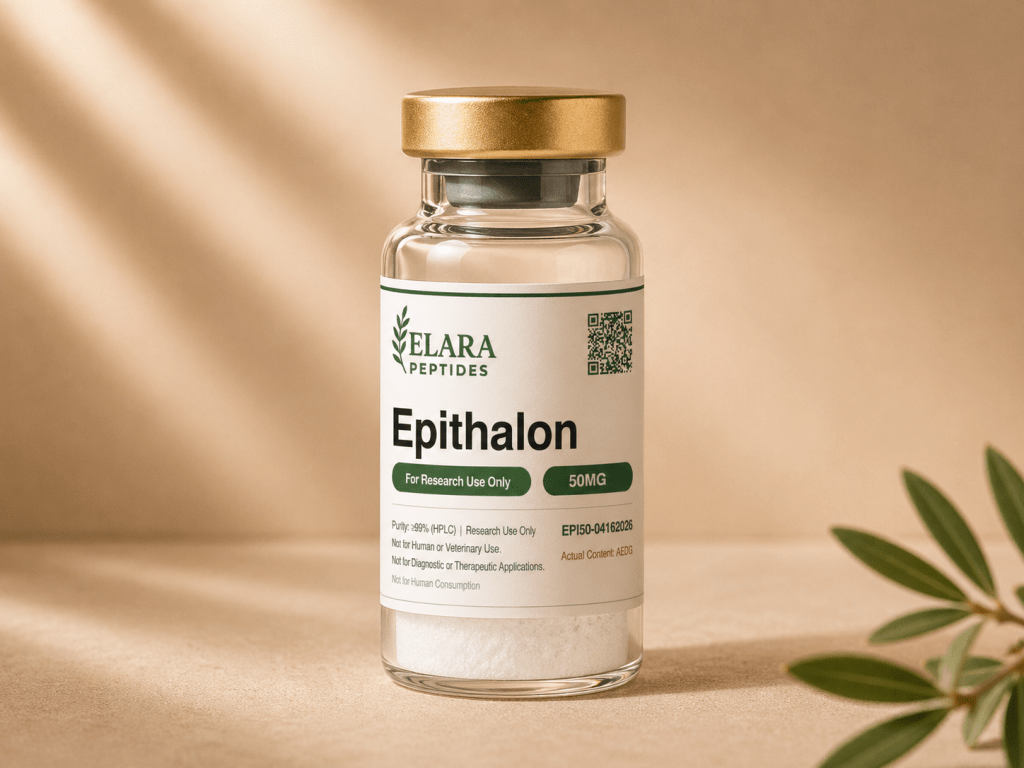
AEDG is the four-letter amino acid abbreviation for Epithalon's sequence: Alanine (A), Glutamic acid (E), Aspartic acid (D), Glycine (G). The single-letter codes spell the structural identity of the compound. The "Actual Content: AEDG" notation on the product label indicates the chemical sequence supplied — a verification that researchers familiar with the compound can use to confirm identity.
Has Epithalon been studied in humans?
Yes, more extensively than most synthetic peptides — but with an important caveat. The bulk of Epithalon human clinical research was conducted by Vladimir Khavinson's group and collaborators in Russia from the 1990s through 2010s, with most publications in Russian-language gerontology journals. Long-term studies in elderly populations have been published, including multi-year follow-up data on outcomes including mortality, immune function, and aging markers. Western researchers have only recently begun engaging systematically with this literature, and English-language replications remain limited. Researchers should consult primary literature directly and apply appropriate scientific scrutiny.
What does the telomerase research mean?
Published research has documented that Epithalon administration in human cell cultures, including somatic cells with normally suppressed telomerase, is associated with telomerase reactivation and telomere elongation. This is one of the more remarkable observations in synthetic peptide research because telomere shortening is a recognized molecular hallmark of cellular aging and most somatic cells lack telomerase activity. Whether the cellular findings translate to clinically meaningful effects on aging in human subjects is an active research question; the human clinical data on this point is more limited than the cellular research.
How is Epithalon different from epithalamin?
Epithalamin is the natural pineal gland extract from which Epithalon was derived. Epithalamin contains multiple bioactive components and is more complex; Epithalon is a synthetic four-amino-acid peptide representing the active core sequence. Epithalon offers the reproducibility of a defined synthetic compound, while early Russian research used both epithalamin and Epithalon — sometimes leading to confusion in the literature about which compound produced which findings.
What does HPLC ≥99% purity actually mean?
High-performance liquid chromatography is the analytical standard for assessing peptide purity. A specification of ≥99% indicates that, of all UV-detectable species in the analyzed sample, at least 99% of the integrated peak area corresponds to the target compound. For Epithalon's small tetrapeptide structure, achieving high purity is more straightforward than for larger peptides, but verification is still important to confirm the correct AEDG sequence is supplied.
How long is Epithalon stable after reconstitution?
Reconstituted Epithalon retains research-grade integrity for approximately 30 days when stored refrigerated at 2–8°C and protected from light. Avoid freeze-thaw cycles. Lyophilized (unreconstituted) Epithalon is stable at -20°C for up to 24 months when properly sealed.
What human pathways does Epithalon research target?
The most-studied pathways with direct human clinical relevance include telomerase activity and telomere maintenance (cellular aging biology), pineal gland function and melatonin secretion (sleep, circadian rhythm, neuroendocrine regulation), gene expression in aging-associated pathways, antioxidant defense, immune senescence, and broader geroprotective biology in elderly populations.
Does Elara test every batch?
Yes. Every production batch of Epithalon receives independent third-party HPLC and mass spectrometry analysis before release. Batches that do not meet our 99% purity specification are rejected. The COA documenting analytical results for the specific batch you receive is included with every shipment and available for download above.
| Purity | =99% (HPLC verified) |
| Form | Lyophilized (freeze-dried) powder |
| Testing | Independent HPLC, mass spectrometry, endotoxin |
| Documentation | Batch-matched Certificate of Analysis |
| SKU | EPITHALON |
Proper storage is essential to maintain peptide integrity and maximize shelf life. Follow these guidelines for best results in your research workflow.
15% off · first order
Get 15% off your first order, plus batch notes and new-compound releases. No noise.
Research use only. Unsubscribe anytime.
You're in
Also sent to your inbox. Apply it at checkout.
WELCOME15

Reviews
There are no reviews yet.