Research Peptides
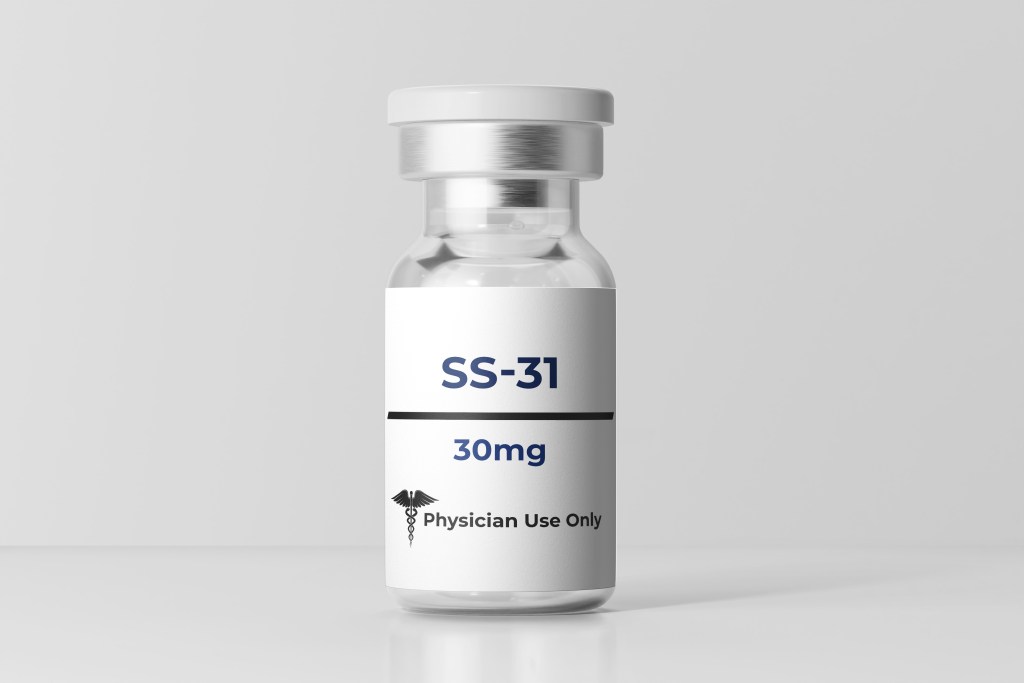
SS-31: 30mg
$219.00
In stock
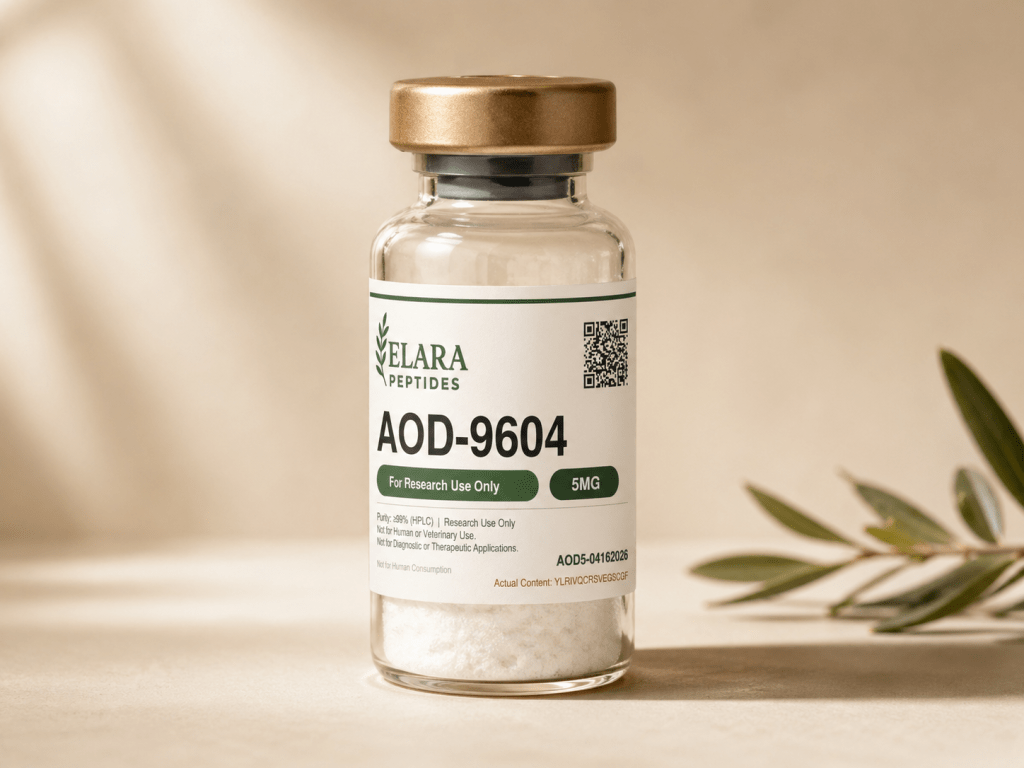
AOD-9604 is a 16-amino-acid synthetic peptide fragment derived from the C-terminal region of human growth hormone (hGH 177-191). The "AOD" designation stands for "Anti-Obesity Drug" — a name reflecting the compound's original development program. It was developed in the 1990s by Metabolic Pharmaceuticals Limited in Australia under the leadership of researchers including Frank Ng, who hypothesized that the lipolytic and metabolic effects of human growth hormone could be isolated from its growth-promoting effects by using only the relevant terminal fragment. AOD-9604 progressed through multiple human clinical trial phases for obesity, ultimately receiving GRAS (Generally Recognized As Safe) designation from the U.S. FDA as a food additive in 2014 — an unusual regulatory history for a research peptide compound.
It is sold for laboratory and analytical research only and is not approved by the U.S. Food and Drug Administration as a therapeutic drug for any indication.
AOD-9604 has the amino acid sequence Tyr-Leu-Arg-Ile-Val-Gln-Cys-Arg-Ser-Val-Glu-Gly-Ser-Cys-Gly-Phe (single-letter: YLRIVQCRSVEGSCGF). The compound is a modified analog of human growth hormone residues 177-191, with an additional N-terminal tyrosine added for synthetic stability and to improve receptor recognition characteristics. Its molecular formula is C78H123N23O23S2 with a molecular weight of approximately 1,815 Daltons.
The structural rationale for AOD-9604 was based on early research separating human growth hormone's distinct biological activities. The growth-promoting effects of hGH are localized primarily to the N-terminal regions of the molecule, while the lipolytic (fat-mobilizing) and metabolic effects were proposed to reside in the C-terminal region. AOD-9604 was designed to retain the C-terminal metabolic activity without the systemic IGF-1-mediated growth effects associated with full-length hGH — a separation that, if achieved, would offer different research and therapeutic possibilities than full hGH or hGH-secretagogue compounds.
The lyophilized (freeze-dried) form supplied for research is stable at -20°C for up to 24 months when sealed and protected from moisture. Following reconstitution with bacteriostatic water, the compound retains research-grade integrity for approximately 30 days when refrigerated at 2–8°C and protected from light. Repeated freeze-thaw cycles should be avoided to maintain experimental reproducibility.
AOD-9604 has been studied for effects on lipid metabolism, adipocyte biology, and metabolic regulation through pathways distinct from full-length human growth hormone. The proposed mechanisms target adipose tissue specifically rather than driving the broader anabolic and growth effects characteristic of intact hGH.
Adipocyte lipolysis. Research in human and animal adipose tissue has documented AOD-9604-associated effects on the breakdown of stored triglycerides into free fatty acids — the lipolysis process — through pathways involving hormone-sensitive lipase activation. The lipolytic effect was the central pharmacological hypothesis underlying the compound's original obesity development program.
Inhibition of lipogenesis. Beyond stimulating fat breakdown, research has examined AOD-9604's effects on suppressing the formation of new adipose tissue (lipogenesis) — particularly in fatty acid synthase activity in adipocytes. The combined hypothesis — increase fat breakdown, decrease fat storage — was the metabolic profile sought in development.
Mitochondrial fat oxidation. Research has documented AOD-9604-associated effects on fatty acid oxidation in mitochondria, with relevance to cellular energy metabolism and fat utilization in human tissues.
Distinction from IGF-1 mediated effects. The most important pharmacological distinction in AOD-9604 research has been the consistent finding that the compound does not significantly elevate IGF-1 levels in human studies — distinguishing it from full-length hGH and hGH secretagogues. This separation was the central pharmacological design goal and was confirmed in clinical research.
Cartilage and joint research. Following the obesity development program, subsequent research has examined AOD-9604 in cartilage and joint repair contexts, with studies documenting effects on chondrocyte function and cartilage matrix biology in osteoarthritis-relevant models. This represents a significant pivot from the original obesity research focus.
Anti-inflammatory effects in joint biology. Research has examined AOD-9604's effects on inflammatory pathways in cartilage and synovial tissue, with relevance to human osteoarthritis — a condition affecting approximately 32 million American adults with limited disease-modifying pharmacological options.
AOD-9604 has an unusual clinical research history that's worth examining honestly. Multiple Phase 1 and Phase 2 human clinical trials were completed, and the compound progressed further than most research peptides in terms of formal clinical development.
Phase 1 obesity studies. Initial Phase 1 trials in healthy and obese human subjects examined safety, pharmacokinetics, and metabolic effects. Published results confirmed the compound did not significantly alter IGF-1, glucose metabolism, or growth-related parameters — confirming the design hypothesis of separating metabolic from growth effects.
Phase 2 and 2b obesity trials. Multiple Phase 2 trials examined AOD-9604 for chronic weight management in overweight and obese subjects. The largest, a Phase 2b trial published in 2007 by Ng and colleagues, examined AOD-9604 over 12 weeks at multiple doses against placebo. Weight loss in the AOD-9604 arms was modest and did not reach the threshold considered necessary for advancing to Phase 3 obesity development. The compound's obesity development program was subsequently discontinued.
The clinical narrative. AOD-9604's Phase 2 disappointment is part of the compound's actual clinical history and worth acknowledging accurately. The original obesity hypothesis — that isolating hGH's lipolytic effects would produce clinically meaningful weight loss — was not supported by the magnitude of effect observed in late-stage trials. This is a clean example of pharmaceutical development working as intended: rigorous trials revealed that the early-stage promise did not translate to clinically meaningful outcomes at the obesity endpoint studied.
Subsequent rehabilitative research. Following the obesity discontinuation, AOD-9604 research has continued in different directions. Studies in cartilage and joint biology, particularly in osteoarthritis-relevant models, have examined the compound's potential in tissue repair contexts. Some published research has documented effects on chondrocyte function and cartilage matrix that have driven continued research interest distinct from the original obesity application.
FDA GRAS designation (2014). In 2014, AOD-9604 received Generally Recognized As Safe (GRAS) status from the U.S. FDA as a food ingredient — a regulatory category distinct from drug approval. The GRAS designation reflects extensive accumulated safety data from the clinical development program and is unusual for a research peptide. It is important to note that GRAS designation as a food ingredient is not equivalent to FDA approval as a therapeutic drug, and AOD-9604 is not approved as a treatment for any medical condition.
Translational research areas with substantial human relevance:
Researchers evaluating AOD-9604 should engage with the full clinical history — both the obesity disappointment and the subsequent research directions — to interpret current findings appropriately.
Every batch of AOD-9604 supplied by Elara is independently analyzed by a third-party laboratory before release. Our Certificate of Analysis documents two distinct verification measures:
HPLC purity (≥99%). High-performance liquid chromatography separates the synthesized peptide from synthesis-related impurities, truncation sequences, and degradation products. Our specification requires a minimum 99% purity at the main peak. AOD-9604 contains two cysteine residues that can complicate synthesis through unintended disulfide formation, making rigorous HPLC verification particularly important.
Mass spectrometry identity confirmation. MS analysis confirms that the molecular weight of the peak compound matches the theoretical molecular weight of AOD-9604 (~1,815 Da), verifying both structural identity and the correct YLRIVQCRSVEGSCGF sequence.
The COA accompanies every shipment and is also available for download on this product page.
For laboratory research applications, AOD-9604 is typically reconstituted using bacteriostatic water (0.9% benzyl alcohol). Standard practice involves slow addition of solvent along the inside wall of the vial — never directly onto the lyophilized powder, which can cause aggregation. The vial is then gently swirled (not shaken or vortexed) until the peptide is fully dissolved.
Once reconstituted, the solution should be stored at 2–8°C, protected from light, and used within 30 days for optimal molecular integrity. Sterile technique is essential during all handling steps. Researchers performing in vitro work or animal model studies should refer to their institution's IACUC protocols and standard handling guidelines specific to their experimental design.
What is AOD-9604?
AOD-9604 is a synthetic 16-amino-acid peptide derived from the C-terminal region of human growth hormone (residues 177-191) with an additional N-terminal tyrosine for stability. The "AOD" designation stands for "Anti-Obesity Drug," reflecting the compound's original development program at Metabolic Pharmaceuticals in Australia. It progressed through Phase 2b human clinical trials before being discontinued for obesity, and received GRAS designation from the FDA as a food ingredient in 2014.
What does YLRIVQCRSVEGSCGF mean?
That is the single-letter amino acid sequence of AOD-9604. Each letter represents one amino acid: Tyrosine (Y), Leucine (L), Arginine (R), Isoleucine (I), Valine (V), Glutamine (Q), Cysteine (C), Arginine (R), Serine (S), Valine (V), Glutamic acid (E), Glycine (G), Serine (S), Cysteine (C), Glycine (G), Phenylalanine (F). The "Actual Content" notation on the product label provides this sequence for verification by researchers familiar with the compound.
How is AOD-9604 different from human growth hormone?
AOD-9604 is a 16-amino-acid fragment representing the C-terminal end of full-length human growth hormone (191 amino acids). The pharmacological design rationale was that hGH's lipolytic and metabolic effects are localized to the C-terminal region, while the growth-promoting effects (including IGF-1 elevation) are localized elsewhere in the molecule. AOD-9604 has been confirmed in clinical research to not significantly elevate IGF-1, distinguishing it from full hGH and hGH secretagogues like Sermorelin, Ipamorelin, and CJC-1295.
Has AOD-9604 been studied in humans?
Yes, more extensively than most research peptides. Multiple Phase 1 and Phase 2 clinical trials in human subjects examined AOD-9604 for obesity, ultimately concluding in a Phase 2b disappointment that ended the obesity development program. Subsequent human research has examined the compound in cartilage and joint contexts. The compound also received FDA GRAS designation as a food ingredient in 2014, reflecting accumulated safety data from the clinical program.
If the obesity trials failed, why is AOD-9604 still being researched?
The obesity Phase 2 disappointment ended development for one specific endpoint (clinically meaningful weight loss in overweight and obese subjects over a 12-week study period at the doses examined). The disappointment did not invalidate the underlying lipolytic mechanism research or other potential applications. Subsequent research has examined the compound in different contexts — particularly cartilage and joint biology — where the safety profile and pharmacological properties remain relevant despite the original endpoint failure.
What does GRAS designation mean?
GRAS (Generally Recognized As Safe) is an FDA regulatory designation for food ingredients with extensive accumulated safety data. AOD-9604 received GRAS status in 2014 as a food ingredient. It is important to understand that GRAS as a food ingredient is regulatorily distinct from FDA approval as a therapeutic drug. AOD-9604 is not approved as a treatment for any medical condition; the GRAS designation reflects accumulated safety data without endorsing any therapeutic claim.
What does HPLC ≥99% purity actually mean?
High-performance liquid chromatography is the analytical standard for assessing peptide purity. A specification of ≥99% indicates that, of all UV-detectable species in the analyzed sample, at least 99% of the integrated peak area corresponds to the target compound. For AOD-9604 specifically, the two cysteine residues introduce possibility of intermolecular and intramolecular disulfide variants during synthesis, making rigorous HPLC verification particularly important.
How long is AOD-9604 stable after reconstitution?
Reconstituted AOD-9604 retains research-grade integrity for approximately 30 days when stored refrigerated at 2–8°C and protected from light. Avoid freeze-thaw cycles. Lyophilized (unreconstituted) AOD-9604 is stable at -20°C for up to 24 months when properly sealed.
Does Elara test every batch?
Yes. Every production batch of AOD-9604 receives independent third-party HPLC and mass spectrometry analysis before release. Batches that do not meet our 99% purity specification are rejected. The COA documenting analytical results for the specific batch you receive is included with every shipment and available for download above.
| BOTTLE DOSE | AOD-9604 5mg | AOD-9604 10mg |
| Purity | =99% (HPLC verified) |
| Form | Lyophilized (freeze-dried) powder |
| Testing | Independent HPLC, mass spectrometry, endotoxin |
| Documentation | Batch-matched Certificate of Analysis |
| SKU | AOD9604 |
Proper storage is essential to maintain peptide integrity and maximize shelf life. Follow these guidelines for best results in your research workflow.
15% off · first order
Get 15% off your first order, plus batch notes and new-compound releases. No noise.
Research use only. Unsubscribe anytime.
You're in
Also sent to your inbox. Apply it at checkout.
WELCOME15
Reviews
There are no reviews yet.