Heal Injuries
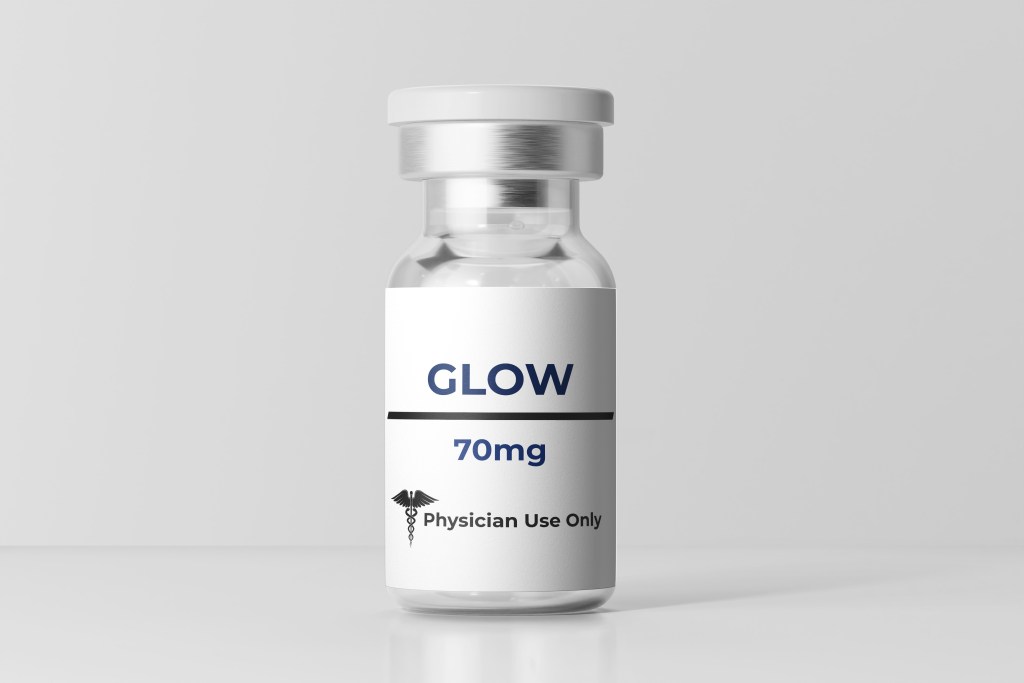
GLOW Blend
$199.00
In stock
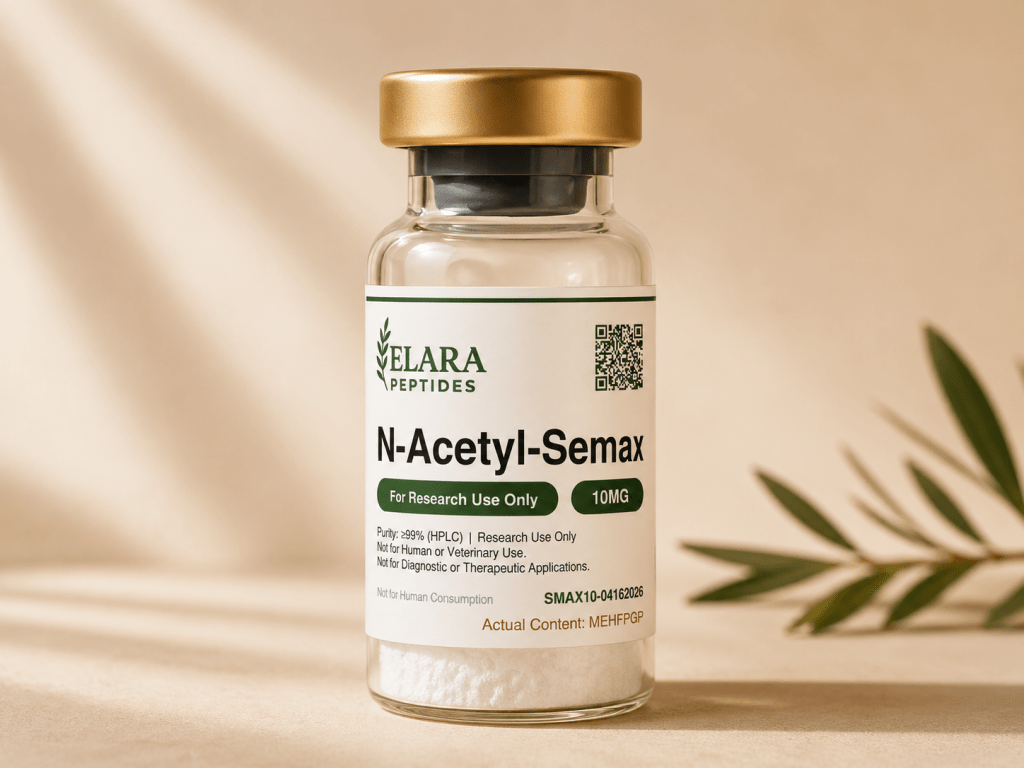
N-Acetyl-Semax is the N-terminally acetylated form of Semax, a synthetic seven-amino-acid peptide derived from a fragment of adrenocorticotropic hormone (ACTH). The base peptide Semax was developed in Russia at the Institute of Molecular Genetics of the Russian Academy of Sciences in the 1980s and is approved as a pharmaceutical in Russia for stroke and cognitive disorder indications under the brand name Semax. The N-acetylated variant features an additional acetyl group at the N-terminus that enhances stability and resistance to enzymatic degradation, extending the compound's biological activity in research applications. Semax has been studied in Russian clinical research for over 30 years across cognitive function, stroke recovery, and neuroprotective applications.
It is sold for laboratory and analytical research only and is not approved by the U.S. Food and Drug Administration for any therapeutic indication.
Base Semax has the sequence Met-Glu-His-Phe-Pro-Gly-Pro (single-letter: MEHFPGP), corresponding to ACTH residues 4–7 (MEHF) with an additional Pro-Gly-Pro tripeptide (PGP) appended at the C-terminus for stability. N-Acetyl-Semax adds an acetyl group at the N-terminal methionine, producing the modified compound. The molecular formula of the base Semax is approximately C37H51N9O10S with a molecular weight of approximately 813.9 Daltons; the N-acetylated form is approximately 855.9 Daltons.
The structural rationale for the original Semax design was based on the observation that the ACTH 4–10 sequence retains certain neurotropic and behavioral effects of the parent hormone without the corticotropic effects (cortisol-stimulating effects) that limit ACTH's usefulness for nervous system applications. Semax's seven-amino-acid sequence and the additional N-acetylation in the modified variant provide enhanced stability, particularly relevant for research applications studying sustained CNS effects.
The lyophilized (freeze-dried) form supplied for research is stable at -20°C for up to 24 months when sealed and protected from moisture. Following reconstitution with bacteriostatic water, the compound retains research-grade integrity for approximately 30 days when refrigerated at 2–8°C and protected from light. Repeated freeze-thaw cycles should be avoided.
Semax research has documented effects on multiple pathways central to human cognitive function, neuroprotection, and brain plasticity. The N-acetylated variant retains these mechanistic effects with enhanced stability.
BDNF and NGF expression. Brain-derived neurotrophic factor (BDNF) and nerve growth factor (NGF) are the two most extensively studied neurotrophins in human brain biology, with documented roles in neuronal survival, synaptic plasticity, learning, and memory. Research has documented Semax-associated upregulation of BDNF and NGF expression in brain tissue and in cell culture models. BDNF/NGF dysregulation is implicated across multiple human neurological and psychiatric conditions including depression, Alzheimer's disease, and stroke recovery.
Cholinergic system modulation. Research has examined Semax effects on the cholinergic system — the same system targeted by acetylcholinesterase inhibitor drugs used in Alzheimer's disease (donepezil, rivastigmine, galantamine). The cholinergic system is central to attention, learning, and memory in human cognition.
Dopaminergic and serotonergic systems. Research has documented Semax effects on dopamine and serotonin neurotransmitter systems, with relevance to mood regulation, motivation, and behavioral function. The behavioral pharmacology of Semax in animal models has driven research interest in mood and anxiety contexts.
Neuroprotection in ischemic injury. One of the most studied research applications of Semax has been in stroke and ischemic brain injury models. Research has documented effects on neuronal survival, infarct size, and functional recovery in rodent stroke models. The clinical translation of this research underlies Semax's approval as a stroke therapeutic in Russia.
Antioxidant and anti-inflammatory effects. Research has examined Semax effects on oxidative stress markers and inflammatory pathways in brain tissue, with relevance to multiple human neurodegenerative and neuroinflammatory conditions.
Hippocampal plasticity and memory. Research has examined Semax effects on hippocampal function — the brain region central to memory formation in humans — including effects on long-term potentiation (LTP) and behavioral memory tasks in animal models.
Stress response modulation. Despite being derived from ACTH, Semax does not significantly elevate cortisol — a key pharmacological design feature. Research has examined effects on stress-response biology including studies in models of acute and chronic stress.
Semax has an unusual research history compared to most synthetic peptides — it has been a clinically used pharmaceutical in Russia for decades, with substantial clinical research published primarily in Russian-language journals. Western researchers have only recently begun engaging systematically with this literature, similar to the situation with Epithalon and other Khavinson-era Russian peptides.
Russian clinical applications. Semax is approved in Russia for indications including ischemic stroke (acute and recovery phases), transient ischemic attack, optic nerve atrophy, and cognitive disorders associated with cerebrovascular insufficiency. The approval is supported by Russian-language clinical trial publications spanning the 1990s through 2010s. The N-acetylated variant studied in research applications is more recent and provides enhanced stability for research protocols.
Stroke and ischemic brain injury research. The largest body of Semax human clinical research is in stroke contexts. Russian clinical trials have examined Semax in acute ischemic stroke and in post-stroke recovery, with published outcomes documenting effects on neurological scoring, functional recovery, and cognitive outcomes. Independent Western replication of these findings remains limited.
Cognitive function research. Semax has been studied in human subjects for cognitive function effects, including in healthy subjects under cognitive load, in patients with cognitive impairment, and in occupational settings (Russian research has examined applications in operators and professionals requiring sustained attention).
Translational research areas with substantial human clinical relevance:
Researchers evaluating Semax should be aware of the unusual research history. The Russian-language literature is substantial but underrepresented in standard Western databases like PubMed; some methodological criticisms have been raised about specific studies; and replication of key findings in independent Western research programs has been limited. Despite these caveats, the regulatory approval status of Semax in Russia and the volume of clinical research warrant serious engagement.
Every batch of N-Acetyl-Semax supplied by Elara is independently analyzed by a third-party laboratory before release. Our Certificate of Analysis documents two distinct verification measures:
HPLC purity (≥99%). High-performance liquid chromatography separates the synthesized peptide from synthesis-related impurities, truncation sequences, deacetylated variants, and degradation products. Our specification requires a minimum 99% purity at the main peak. For N-Acetyl-Semax specifically, HPLC verification confirms proper N-terminal acetylation distinguishing the modified compound from base Semax.
Mass spectrometry identity confirmation. MS analysis confirms that the molecular weight of the peak compound matches the theoretical molecular weight of N-Acetyl-Semax (~855.9 Da), verifying both structural identity and the correct MEHFPGP sequence with N-terminal acetylation. The mass signature distinguishes N-Acetyl-Semax (~855.9 Da) from base Semax (~813.9 Da) by the +42 Da mass shift characteristic of acetylation.
The COA accompanies every shipment and is also available for download on this product page.
For laboratory research applications, N-Acetyl-Semax is typically reconstituted using bacteriostatic water (0.9% benzyl alcohol). Standard practice involves slow addition of solvent along the inside wall of the vial — never directly onto the lyophilized powder, which can cause aggregation. The vial is then gently swirled (not shaken or vortexed) until the peptide is fully dissolved.
Once reconstituted, the solution should be stored at 2–8°C, protected from light, and used within 30 days for optimal molecular integrity. Sterile technique is essential during all handling steps. Researchers performing in vitro work or animal model studies should refer to their institution's IACUC protocols and standard handling guidelines specific to their experimental design.
What is N-Acetyl-Semax?
N-Acetyl-Semax is the N-terminally acetylated form of Semax, a synthetic seven-amino-acid peptide derived from ACTH residues 4–7 with an additional Pro-Gly-Pro stabilizer sequence. The N-terminal acetyl group enhances stability and resistance to enzymatic degradation compared to base Semax. Semax is approved as a pharmaceutical in Russia for stroke and cognitive disorder indications and has been studied in Russian clinical research for over 30 years.
What does MEHFPGP mean?
That is the single-letter amino acid sequence of Semax: Methionine (M), Glutamic acid (E), Histidine (H), Phenylalanine (F), Proline (P), Glycine (G), Proline (P). The first four amino acids (MEHF) correspond to ACTH residues 4–7; the final three (PGP) are an added stabilizer sequence. N-Acetyl-Semax has the same sequence with an additional acetyl group at the N-terminal methionine.
How is N-Acetyl-Semax different from base Semax?
The N-acetylation provides enhanced stability and resistance to aminopeptidase enzymes that would otherwise cleave the N-terminal methionine. The pharmacological effects are similar to base Semax with extended duration of action, making the modified variant useful for research protocols studying sustained CNS effects. The Russian clinical research is primarily on base Semax; the N-acetylated variant is more commonly used in modern research applications.
How is Semax different from ACTH?
ACTH is a 39-amino-acid pituitary hormone with multiple biological activities including stimulation of cortisol release from the adrenal cortex (the "corticotropic" activity), neurotrophic effects, and behavioral effects. Semax represents the ACTH 4–7 fragment with stabilization, designed to retain the neurotropic and behavioral effects without the corticotropic activity. Research has confirmed that Semax does not significantly elevate cortisol — the key pharmacological design feature distinguishing it from full ACTH.
Has Semax been studied in humans?
Extensively, but with caveats. Semax has been a clinically used pharmaceutical in Russia for decades with substantial clinical research published primarily in Russian-language journals. Russian clinical trials have examined applications in stroke, cognitive disorders, and other neurological conditions. Western clinical research replication is more limited, and Russian studies have faced some methodological scrutiny. Researchers should consult primary literature and apply scientific scrutiny to claims that exceed what published data supports.
What does HPLC ≥99% purity actually mean?
High-performance liquid chromatography is the analytical standard for assessing peptide purity. A specification of ≥99% indicates that, of all UV-detectable species in the analyzed sample, at least 99% of the integrated peak area corresponds to the target compound. For N-Acetyl-Semax specifically, HPLC verification confirms proper N-terminal acetylation distinguishing the compound from base Semax and from deacetylated breakdown products.
How long is N-Acetyl-Semax stable after reconstitution?
Reconstituted N-Acetyl-Semax retains research-grade integrity for approximately 30 days when stored refrigerated at 2–8°C and protected from light. Avoid freeze-thaw cycles. Lyophilized (unreconstituted) N-Acetyl-Semax is stable at -20°C for up to 24 months when properly sealed.
What human pathways does Semax research target?
The most-studied pathways with direct human clinical relevance include BDNF and NGF expression (neurotrophins central to neuronal survival and synaptic plasticity), cholinergic system modulation (the same system targeted by Alzheimer's medications), dopaminergic and serotonergic systems (relevant to mood and motivation), neuroprotection in ischemic injury, hippocampal plasticity and memory, and stress response biology without HPA axis activation.
Does Elara test every batch?
Yes. Every production batch of N-Acetyl-Semax receives independent third-party HPLC and mass spectrometry analysis before release. Batches that do not meet our 99% purity specification — including verification of proper N-terminal acetylation — are rejected. The COA documenting analytical results for the specific batch you receive is included with every shipment and available for download above.
| Purity | =99% (HPLC verified) |
| Form | Lyophilized (freeze-dried) powder |
| Testing | Independent HPLC, mass spectrometry, endotoxin |
| Documentation | Batch-matched Certificate of Analysis |
| SKU | NASEMAX |
Proper storage is essential to maintain peptide integrity and maximize shelf life. Follow these guidelines for best results in your research workflow.
Reviews
There are no reviews yet.