Cellular Energy Research
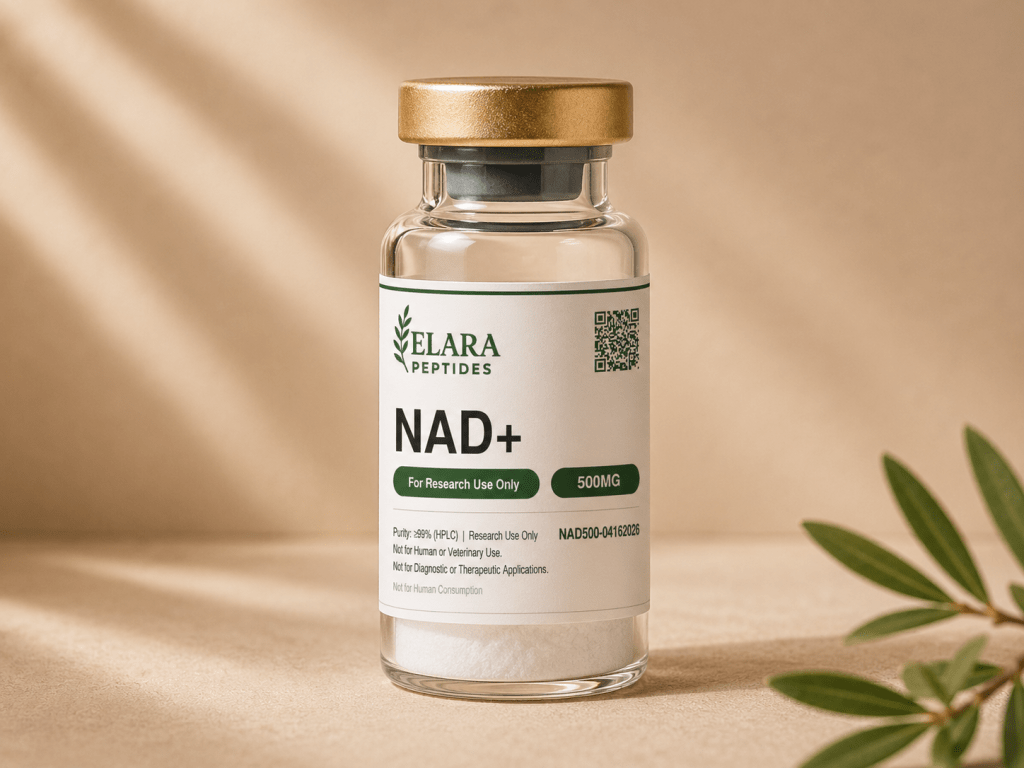
NAD+ 500mg
$249.00
In stock
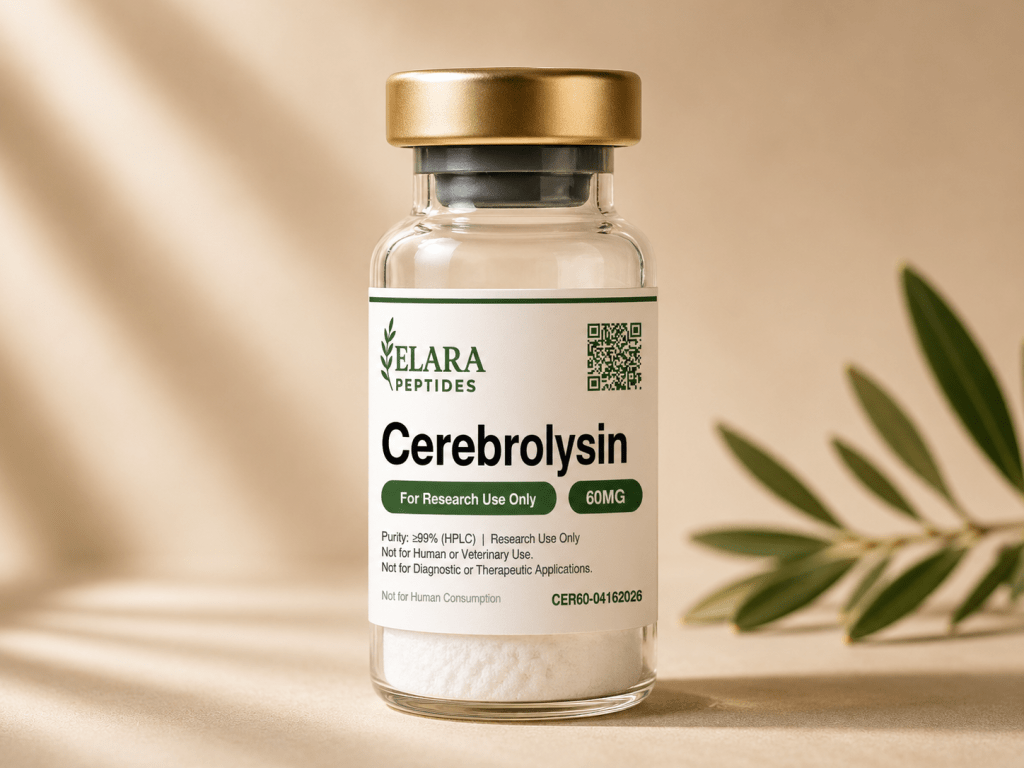
Cerebrolysin is the registered name for a complex peptide preparation derived from purified porcine brain tissue, originally developed by EVER Pharma in Austria and used clinically in over 50 countries for indications including ischemic stroke, traumatic brain injury, vascular dementia, and Alzheimer's disease. The clinical Cerebrolysin preparation contains a defined mixture of low-molecular-weight peptides (under 10 kDa) and free amino acids derived from controlled enzymatic hydrolysis of porcine brain proteins, including fragments with neurotrophic-factor-like activity. It has not received FDA approval in the United States but represents one of the most extensively studied complex peptide preparations in modern neurology, with hundreds of human clinical trials published over more than four decades.
Important note: a research-grade Cerebrolysin compound supplied by Elara is a synthesized analog representation rather than the licensed pharmaceutical preparation manufactured by EVER Pharma. The clinical research literature describes the licensed pharmaceutical product, and researchers should distinguish between the licensed clinical preparation and synthesized research compounds when designing experiments and interpreting results.
It is sold for laboratory and analytical research only and is not approved by the U.S. Food and Drug Administration for any therapeutic indication.
The clinical Cerebrolysin pharmaceutical preparation contains a complex mixture of peptides under 10 kDa molecular weight (representing approximately 25% of total content) and free amino acids (approximately 75%) derived from controlled enzymatic hydrolysis of porcine brain proteins. The peptide fraction includes fragments with documented neurotrophic-factor-like activity, including fragments related to ciliary neurotrophic factor (CNTF) and other endogenous neurotrophins.
This composition makes Cerebrolysin pharmacologically distinct from defined synthetic peptide compounds — it is a mixture of bioactive components rather than a single defined molecular entity. This compositional complexity has been both a feature (potentially providing the multiple bioactive components needed for complex neurological conditions) and a limitation (making analytical characterization and reproducibility more challenging than for single-molecule pharmaceuticals).
The lyophilized (freeze-dried) form supplied for research is stable at -20°C for up to 24 months when sealed and protected from moisture. Following reconstitution with bacteriostatic water, the compound retains research-grade integrity for approximately 30 days when refrigerated at 2–8°C and protected from light. Repeated freeze-thaw cycles should be avoided.
Cerebrolysin research has documented effects across multiple pathways central to neuroprotection, neuroplasticity, and recovery from neurological injury. The mechanisms reflect the multi-component nature of the preparation.
Neurotrophic factor-like activity. Multiple peptide components in the Cerebrolysin preparation have documented neurotrophic-factor-like activity, including effects similar to nerve growth factor (NGF), brain-derived neurotrophic factor (BDNF), and ciliary neurotrophic factor (CNTF). These neurotrophins are central to neuronal survival, axonal regeneration, and synaptic plasticity in human nervous tissue. Direct administration of recombinant human neurotrophic factors faces challenges including blood-brain barrier penetration and short biological half-lives — challenges that the small peptide fragments in Cerebrolysin may partially circumvent.
Neuroprotection in ischemic injury. Research has documented Cerebrolysin effects in stroke and ischemic brain injury models, with documented effects on neuronal survival, infarct size, blood-brain barrier integrity, and functional recovery. The neuroprotective mechanisms appear to operate through multiple parallel pathways including reduced excitotoxicity, attenuated inflammatory cascades, and direct neurotrophic support.
Neuroplasticity and synaptic function. Research has examined Cerebrolysin effects on synaptic plasticity, long-term potentiation (LTP), and dendritic complexity in animal models. These mechanisms are central to human cognitive function and are dysregulated in conditions including Alzheimer's disease, vascular dementia, and post-stroke cognitive impairment.
Anti-amyloid and Alzheimer's-relevant pathways. Research has examined Cerebrolysin effects on amyloid-beta processing, tau pathology, and Alzheimer's-relevant neurodegeneration. Multiple Phase 2 and Phase 3 clinical trials in Alzheimer's disease have been conducted internationally with documented effects on cognitive endpoints and Alzheimer's-relevant biomarkers.
Anti-inflammatory effects in brain tissue. Research has documented effects on neuroinflammation, microglial activation, and inflammatory cytokine cascades in brain tissue. Neuroinflammation is a contributing factor across multiple human neurological conditions and is increasingly recognized as a therapeutic target.
Mitochondrial function in neurons. Research has examined effects on neuronal mitochondrial function, energy metabolism, and oxidative stress responses. Mitochondrial dysfunction is implicated in multiple neurodegenerative conditions in human medicine.
The clinical Cerebrolysin pharmaceutical has one of the most extensive human clinical research portfolios of any neurological intervention, with hundreds of published clinical trials spanning multiple decades and disease areas.
Ischemic stroke research. Multiple Phase 3 clinical trials have examined Cerebrolysin in acute ischemic stroke and post-stroke recovery. Outcomes assessed have included neurological scoring (NIHSS, modified Rankin Scale), functional recovery, cognitive outcomes, and quality of life measures. Results have been mixed across trials, with some demonstrating statistically significant benefit and others showing more modest effects, reflecting the complexity of stroke as a clinical research endpoint.
Vascular dementia research. Cerebrolysin has been studied extensively in vascular dementia, with multiple clinical trials documenting effects on cognitive function and global functioning measures. The compound is approved for vascular dementia indications in multiple countries including European Union member states and several Asian countries.
Alzheimer's disease research. Multiple Phase 2 and Phase 3 trials have examined Cerebrolysin in Alzheimer's disease, with documented effects on cognitive endpoints and Alzheimer's biomarkers. Results have varied across studies, but the cumulative evidence supports continued research interest particularly in combination with other Alzheimer's interventions.
Traumatic brain injury research. Clinical research has examined Cerebrolysin in moderate-to-severe TBI, with documented effects on neurological recovery and cognitive outcomes. TBI represents a major area of unmet medical need with limited pharmacological options for established neurological deficit.
Pediatric neurology research. The compound has been studied in pediatric contexts including autism spectrum disorders, attention deficit conditions, and cerebral palsy, primarily in research programs in Europe and Asia where the compound is licensed.
Translational research areas with substantial human clinical relevance:
Every batch of Cerebrolysin research compound supplied by Elara is independently analyzed by a third-party laboratory before release. Our Certificate of Analysis documents two distinct verification measures:
HPLC purity (≥99%). High-performance liquid chromatography characterizes the peptide composition of the preparation. For complex peptide preparations like Cerebrolysin, HPLC analysis confirms the consistency of peptide content batch to batch — a particular consideration for multi-component preparations where reproducibility of composition is important for research applications.
Mass spectrometry profiling. MS analysis profiles the molecular weight distribution of components, confirming the expected presence of low-molecular-weight peptide and amino acid components characteristic of the Cerebrolysin compositional profile.
The COA accompanies every shipment and is also available for download on this product page.
For laboratory research applications, Cerebrolysin research compound is typically reconstituted using bacteriostatic water (0.9% benzyl alcohol). Standard practice involves slow addition of solvent and gentle agitation until fully dissolved.
Once reconstituted, the solution should be stored at 2–8°C, protected from light, and used within 30 days for optimal molecular integrity. Sterile technique is essential during all handling steps. Researchers performing in vitro work or animal model studies should refer to their institution's IACUC protocols and standard handling guidelines specific to their experimental design.
What is Cerebrolysin?
Cerebrolysin is the registered name for a complex peptide preparation originally developed by EVER Pharma in Austria, derived from purified porcine brain tissue through controlled enzymatic hydrolysis. It contains a defined mixture of low-molecular-weight peptides and free amino acids with neurotrophic-factor-like activity. The clinical pharmaceutical is used in over 50 countries for indications including stroke, dementia, and brain injury, though it is not FDA-approved in the United States.
Is Elara's Cerebrolysin the same as the EVER Pharma pharmaceutical?
No. The Cerebrolysin research compound supplied by Elara is a research-grade synthesized representation of the Cerebrolysin compositional profile. It is not the licensed pharmaceutical product manufactured by EVER Pharma. Researchers using the clinical literature on Cerebrolysin should distinguish between the licensed pharmaceutical preparation studied in clinical trials and synthesized research compounds. For therapeutic use, researchers must obtain the licensed pharmaceutical through appropriate regulatory channels in countries where it is approved.
Has Cerebrolysin been studied in humans?
Extensively. Cerebrolysin has one of the most developed human clinical research portfolios of any neurological intervention, with hundreds of published clinical trials over more than four decades. The clinical research has examined applications in ischemic stroke, vascular dementia, Alzheimer's disease, traumatic brain injury, and pediatric neurological conditions. Results have varied across studies, reflecting the complexity of these clinical endpoints.
Why isn't Cerebrolysin FDA-approved in the United States?
Cerebrolysin has not pursued FDA approval pathways in the United States, where it is not licensed for clinical use. The compound is approved in over 50 other countries including European Union member states, Russia, China, and several Latin American countries. Multiple factors contribute to the absence of US approval including regulatory pathway considerations and the manufacturer's commercial decisions about market priorities. Researchers in the United States cannot legally administer the licensed pharmaceutical for therapeutic use; the research compound supplied by Elara is for laboratory research only.
How does Cerebrolysin produce neurological effects?
The clinical Cerebrolysin preparation contains multiple peptide components with neurotrophic-factor-like activity, including fragments related to NGF, BDNF, and CNTF. Research has documented effects across multiple pathways including neuroprotection in ischemic injury, neuroplasticity and synaptic function, anti-inflammatory effects in brain tissue, and effects on amyloid and tau pathology relevant to Alzheimer's disease. The multi-component nature of the preparation likely contributes to its effects across diverse neurological conditions.
What does HPLC ≥99% purity mean for a complex preparation?
For complex peptide preparations like Cerebrolysin, HPLC purity refers to the consistency and characterization of the peptide compositional profile rather than purity of a single molecular entity. The ≥99% specification indicates that the analyzed sample is composed of expected components without significant unidentified contaminants. Multi-component preparations require somewhat different analytical approaches than single-molecule pharmaceuticals.
How long is Cerebrolysin stable after reconstitution?
Reconstituted Cerebrolysin retains research-grade integrity for approximately 30 days when stored refrigerated at 2–8°C and protected from light. Avoid freeze-thaw cycles. Lyophilized (unreconstituted) Cerebrolysin is stable at -20°C for up to 24 months when properly sealed.
What human pathways does Cerebrolysin research target?
The most-studied pathways with direct human clinical relevance include neurotrophic factor-like activity (NGF, BDNF, CNTF-related effects), neuroprotection in ischemic injury, neuroplasticity and synaptic function, anti-amyloid and Alzheimer's-relevant pathways, neuroinflammation and microglial activation, and mitochondrial function in neurons.
Does Elara test every batch?
Yes. Every production batch of Cerebrolysin research compound receives independent third-party HPLC and mass spectrometry analysis before release. Batches that do not meet our specification — including verification of expected compositional profile — are rejected. The COA documenting analytical results for the specific batch you receive is included with every shipment and available for download above.
| Purity | =99% (HPLC verified) |
| Form | Lyophilized (freeze-dried) powder |
| Testing | Independent HPLC, mass spectrometry, endotoxin |
| Documentation | Batch-matched Certificate of Analysis |
| SKU | CEREBRO |
Proper storage is essential to maintain peptide integrity and maximize shelf life. Follow these guidelines for best results in your research workflow.
15% off · first order
Get 15% off your first order, plus batch notes and new-compound releases. No noise.
Research use only. Unsubscribe anytime.
You're in
Also sent to your inbox. Apply it at checkout.
WELCOME15
Reviews
There are no reviews yet.