TLDR:
- Reconstitution means dissolving freeze-dried peptide powder into bacteriostatic water to create a usable liquid solution
- Always inject the water slowly along the vial wall – never directly onto the powder, and never shake the vial
- Use this formula to calculate concentration: Peptide Amount (mg) / Water Volume (mL) = Concentration (mg/mL)
- Store reconstituted peptides at 2-8 degrees Celsius (standard refrigerator temperature) and use within 3-4 weeks
- Bacteriostatic water is preferred over sterile water because it contains 0.9% benzyl alcohol, which inhibits bacterial growth during multi-use access
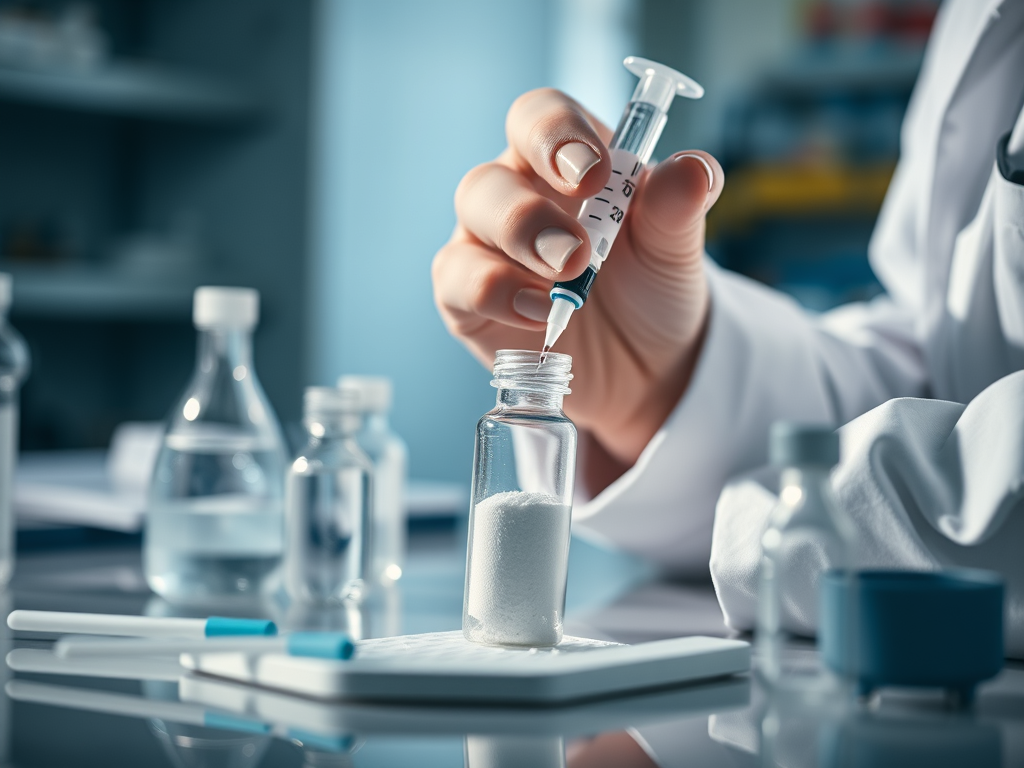
If you have ever ordered research peptides and opened the package to find a small vial of white powder, you are not alone in wondering what to do next. That freeze-dried powder is a lyophilized peptide – preserved in its most stable form for shipping and storage. Before it can be used in any research application, it needs to be reconstituted (dissolved) into a liquid solution.
This guide is for researchers, wellness enthusiasts, biohackers, and anyone working with research-grade peptides who wants to get the reconstitution process right the first time. Whether you are working with BPC-157, GHK-Cu, or any other lyophilized peptide, the fundamental steps are the same – and getting them right is the difference between a potent, stable solution and a degraded one.
Quick Answer: How Do You Reconstitute Peptides?
To reconstitute a peptide, clean both the peptide vial and bacteriostatic water vial with alcohol swabs. Draw the desired amount of bacteriostatic water into a sterile syringe, insert the needle into the peptide vial, and slowly inject the water along the inside wall of the vial – not directly onto the powder. Remove the syringe, then gently swirl the vial until the powder is fully dissolved. Do not shake. Store the reconstituted solution in the refrigerator at 2-8 degrees Celsius.
What Is Peptide Reconstitution (and Why Does It Matter)?
Peptide reconstitution is the process of dissolving a lyophilized (freeze-dried) peptide powder back into a liquid form using a sterile solvent. Lyophilization removes all moisture from the peptide during manufacturing, which dramatically improves shelf life and protects the delicate amino acid chains during shipping and storage.
However, peptides cannot exhibit biological activity in their dry, powdered form. They need to be dissolved into solution before they can be used for research applications. That is where reconstitution comes in.
Why does technique matter? Peptides are sensitive molecules. Improper handling during reconstitution – vigorous shaking, using the wrong solvent, contamination from unclean surfaces – can cause aggregation (clumping), oxidation, denaturation, or bacterial contamination. Any of these problems can reduce the peptide’s potency or render it unusable entirely.
When you start with high-purity, third-party tested peptides, proper reconstitution ensures that quality carries through to your research.
What You Will Need: Supplies Checklist
Before you begin, gather all your materials in a clean workspace. Having everything ready prevents unnecessary delays that leave your vial open to environmental exposure.
Required supplies:
- Lyophilized peptide vial (sealed, with intact cap)
- Bacteriostatic water (BAC water) – the most common and recommended solvent
- Sterile syringe for drawing and transferring the solvent (typically 1 mL or 3 mL)
- Sterile needle (18-21 gauge for drawing water; 25-27 gauge for drawing final solution)
- Alcohol prep pads/swabs
- Clean, flat workspace
- Disposable gloves (recommended)
Optional but helpful:
- Sharps disposal container
- Vial labels and marker for dating
- Calculator (for concentration math)
Choosing the Right Solvent: Bacteriostatic Water vs. Sterile Water
The solvent you choose has a direct impact on how long your reconstituted peptide stays stable and safe. Here is how the two most common options compare.
Bacteriostatic Water (Recommended for Most Peptides)
Bacteriostatic water is sterile water that contains 0.9% benzyl alcohol as a preservative. The benzyl alcohol inhibits bacterial growth without interfering with the peptide’s structure or biological activity. This makes it the standard choice for research peptides that will be accessed multiple times over days or weeks.
Key advantages of bacteriostatic water:
- Prevents bacterial contamination during repeated vial access
- Allows multi-dose use from a single reconstituted vial
- Reconstituted peptides typically remain stable for 3-4 weeks when refrigerated
- Compatible with the vast majority of research peptides
Sterile Water
Sterile water is purified and free of microorganisms, but it contains no preservatives. Once you puncture the seal, there is nothing preventing bacterial growth. Sterile water is appropriate for single-use applications where the entire reconstituted volume will be used immediately.
Key limitations of sterile water:
- No preservative means contamination risk begins immediately after opening
- Should be discarded within 24 hours of opening
- Not suitable for multi-dose protocols
When to Consider Other Solvents
Most standard research peptides dissolve readily in bacteriostatic water. However, some peptides with unusual solubility profiles may require alternative solvents:
- Highly basic peptides (rich in lysine, arginine, or histidine residues): A dilute acetic acid solution (0.1-10%) can help with dissolution
- Highly acidic peptides (rich in aspartic acid or glutamic acid): A dilute ammonium bicarbonate or sodium hydroxide solution may improve solubility
- Hydrophobic peptides (high percentage of nonpolar amino acid residues): Small amounts of DMSO or DMF may be required, though these should be used cautiously and in minimal quantities
Always check the product documentation or Certificate of Analysis (COA) for any specific solubility recommendations for your particular peptide.
Step-by-Step: How to Reconstitute Peptides with Bacteriostatic Water
Follow these steps carefully to ensure a clean, fully dissolved, properly concentrated peptide solution.
Step 1: Prepare Your Workspace and Supplies
Wash your hands thoroughly and put on clean gloves. Wipe down your workspace with a disinfectant. Lay out all your supplies within easy reach. Confirm that your peptide vial seal is intact and the powder appears normal (white to off-white lyophilized cake or powder – some peptides may appear as a thin disc at the bottom of the vial).
Step 2: Bring Vials to Room Temperature
If your peptide and bacteriostatic water have been stored in the refrigerator or freezer, allow both vials to reach room temperature before starting. This typically takes about 20-30 minutes. Reconstituting with cold solutions can cause cloudiness and may interfere with proper dissolution.
Do not heat the vials to speed this up. Simply set them on your clean workspace at room temperature, away from direct light.
Step 3: Clean the Vial Stoppers
Remove the plastic flip-top cap from both the peptide vial and the bacteriostatic water vial. Using a fresh alcohol prep pad for each, thoroughly wipe the exposed rubber stopper on both vials. Allow the alcohol to air dry completely (about 10-15 seconds). Do not blow on the stoppers to dry them.
Step 4: Draw the Bacteriostatic Water
Determine how much bacteriostatic water you need (see the Concentration Calculator section below). Attach a sterile needle to your syringe. Pull back the plunger to draw in a small amount of air equal to the volume of water you plan to withdraw.
Insert the needle into the bacteriostatic water vial’s rubber stopper. Inject the air into the vial to equalize pressure (this makes drawing the water much easier). Invert the vial and slowly draw out the desired amount of water. Remove any air bubbles by gently tapping the syringe barrel and pushing them back out.
Step 5: Inject the Water into the Peptide Vial
This is the most important step to get right.
Insert the needle into the peptide vial’s rubber stopper at a slight angle. Position the needle tip so it touches the inside wall of the vial, above the powder. Slowly depress the plunger, allowing the water to trickle down the glass wall of the vial.
Critical: Do not spray or squirt the water directly onto the lyophilized powder. Direct force can damage the peptide structure and cause foaming, which introduces air and may lead to oxidation. The goal is a gentle, controlled flow down the side of the vial.
Step 6: Equalize Pressure
Before removing the syringe, lift the needle tip so it sits above the liquid level but remains below the rubber stopper. Release pressure on the plunger slightly – the syringe may draw back on its own as vial pressure equalizes. This step prevents solution from spraying out when you remove the needle.
Step 7: Dissolve the Peptide
Remove the syringe and needle from the vial. Now, gently swirl the vial in a slow, circular motion to encourage the powder to dissolve. You can also gently roll the vial between your palms.
Never shake the vial. Vigorous shaking can cause foaming, aggregation, and physical damage to the peptide’s molecular structure.
Most peptides will dissolve within 1-3 minutes of gentle swirling. If particles remain visible after several minutes, allow the vial to sit undisturbed for 15-30 minutes at room temperature, then swirl gently again. A properly reconstituted peptide should produce a clear, colorless solution with no visible particles.
If cloudiness or particles persist after extended gentle mixing, the peptide may have been damaged, the wrong solvent may be needed, or the product may have been compromised before reconstitution. Do not use a solution that remains cloudy or contains visible particles.
Step 8: Label and Store
Using a marker or adhesive label, write the following information on the vial:
- Peptide name
- Concentration (mg/mL)
- Date of reconstitution
- Volume of solvent added
Store the reconstituted vial upright in the refrigerator at 2-8 degrees Celsius. Keep it away from light and avoid placing it in the freezer door where temperature fluctuates.
Peptide Reconstitution Calculator: How to Determine Concentration
Getting your concentration math right is essential for accurate, repeatable work. The formula is straightforward:
Concentration (mg/mL) = Peptide Amount (mg) / Volume of Solvent Added (mL)
Example Calculations
Example 1: You have a 5 mg vial of peptide and add 2 mL of bacteriostatic water.
5 mg / 2 mL = 2.5 mg/mL
Each milliliter of your solution contains 2.5 mg of peptide.
Example 2: You have a 10 mg vial of peptide and add 2 mL of bacteriostatic water.
10 mg / 2 mL = 5 mg/mL
Each milliliter of your solution contains 5 mg of peptide.
Example 3: You have a 5 mg vial and want a concentration of 1 mg/mL.
5 mg / 1 mg/mL = 5 mL of bacteriostatic water needed.
Understanding Syringe Units
Most insulin-type syringes are marked in “units” rather than milliliters. On a standard U-100 syringe:
- 100 units = 1 mL
- 50 units = 0.5 mL
- 10 units = 0.1 mL
So if you need to draw 0.2 mL of your reconstituted solution, you would pull the syringe to the 20-unit mark.
Practical Tips for Concentration Planning
- Adding less water creates a more concentrated solution (smaller volumes per measurement, but harder to measure very small amounts accurately)
- Adding more water creates a more dilute solution (easier to measure, but larger volumes may be impractical and can reduce shelf life)
- For most research peptides in the 5-10 mg range, adding 1-2 mL of bacteriostatic water is a common and practical starting point
- Consider your intended use volume and syringe size when deciding on concentration
The Science Behind It: Why Lyophilization and Proper Reconstitution Matter
Understanding why peptides are freeze-dried – and why reconstitution technique matters – comes down to basic biochemistry and stability science.
How Lyophilization Preserves Peptides
Lyophilization (freeze-drying) is a three-stage process. First, the liquid peptide solution is frozen. Then, a vacuum is applied and the ice is converted directly to vapor through sublimation (primary drying). Finally, residual moisture is removed through secondary drying at slightly elevated temperatures.
The result is a dry, stable powder with extremely low moisture content. Research published in peer-reviewed journals has demonstrated that lyophilized peptides can remain stable at -20 degrees Celsius for years when stored properly (PubMed – Peptide Formulation Stability). By removing water, the primary driver of hydrolysis (chemical breakdown by water molecules) is eliminated, dramatically slowing degradation.
What Can Go Wrong During Reconstitution
Several degradation pathways can be triggered by poor reconstitution technique:
- Aggregation: Vigorous shaking or squirting water directly onto the powder can cause peptide molecules to cluster together into insoluble aggregates, reducing the effective concentration of usable peptide in solution
- Oxidation: Excessive foaming introduces air bubbles, which expose oxygen-sensitive amino acid residues (particularly cysteine, methionine, and tryptophan) to oxidative damage (Sigma-Aldrich – Peptide Handling Guidelines)
- Denaturation: Extreme temperature changes, wrong pH, or incompatible solvents can disrupt the peptide’s three-dimensional structure
- Contamination: Failure to sterilize vial stoppers or use of non-sterile equipment introduces bacteria, which can degrade the peptide and produce harmful byproducts
This is why starting with high-quality peptides matters just as much as proper technique. A Certificate of Analysis (COA) confirms the purity and identity of your peptide before you ever open the vial – verifying through HPLC and mass spectrometry that what is on the label is actually in the vial at the stated purity.
How to Store Peptides After Reconstitution
Once your peptide is in solution, proper storage becomes critical. Reconstituted peptides are significantly more susceptible to degradation than their lyophilized counterparts.
Storage Temperature Guidelines
| Peptide Form | Recommended Temperature | Typical Stability |
|---|---|---|
| Lyophilized (unopened) | -20 degrees C or colder | Months to years |
| Lyophilized (opened/resealed) | -20 degrees C | Weeks to months |
| Reconstituted with BAC water | 2-8 degrees C (refrigerator) | 3-4 weeks |
| Reconstituted with sterile water | 2-8 degrees C | Use within 24 hours |
| Frozen aliquots | -20 degrees C | 2-4 months (varies) |
Storage Best Practices
- Keep reconstituted vials upright in the main body of the refrigerator, not in the door
- Protect from light – store in a dark area or wrap the vial in aluminum foil if needed
- Always clean the stopper with an alcohol swab before each access
- Minimize the number of times you puncture the stopper (each access is a contamination opportunity)
- Note the date of reconstitution on the vial label and discard after 4 weeks maximum when using bacteriostatic water
Aliquoting for Long-Term Storage
If you will not use the entire reconstituted volume within 3-4 weeks, consider dividing the solution into smaller single-use aliquots and freezing them at -20 degrees Celsius. This reduces repeated freeze-thaw cycles, which are one of the most common causes of peptide degradation in solution. Each aliquot can be thawed once when needed, used, and discarded.
Use sterile, low-binding microcentrifuge tubes or small glass vials for aliquoting. Label each tube with the peptide name, concentration, volume, and date.
Common Reconstitution Mistakes (and How to Avoid Them)
Even experienced researchers sometimes make these errors. Knowing what to watch for can save you from wasting a valuable peptide.
Mistake 1: Shaking the vial. This is the single most common error. Shaking introduces air, causes foaming, and can physically damage the peptide through shear forces. Always swirl gently.
Mistake 2: Squirting water directly onto the powder. The high-pressure stream can denature the peptide on contact. Always aim the needle at the vial wall and let the water trickle down slowly.
Mistake 3: Using the wrong solvent. Not all peptides dissolve in plain bacteriostatic water. Check your product documentation before assuming. Using an incompatible solvent can result in incomplete dissolution or precipitation.
Mistake 4: Failing to sterilize vial stoppers. Skipping the alcohol swab step is an invitation for bacterial contamination. This takes 10 seconds and protects the entire reconstituted supply.
Mistake 5: Reconstituting while cold. Adding cold solvent to a cold vial can cause cloudiness and incomplete dissolution. Always allow both vials to reach room temperature first.
Mistake 6: Storing at room temperature. Reconstituted peptides degrade rapidly at room temperature. Get the vial into the refrigerator as soon as the powder is dissolved.
Mistake 7: Ignoring visual quality checks. A properly reconstituted solution should be clear and free of particles. If it looks cloudy, discolored, or contains visible floating material, something went wrong. Do not use it.
Mistake 8: Not labeling the vial. It is surprisingly easy to forget what concentration you mixed, or when. Always label immediately after reconstitution.
Elara Product Spotlight: Quality Peptides Deserve Proper Handling
The reconstitution process is only as good as the peptide you start with. Every peptide from Elara Research Peptides ships with a Certificate of Analysis (COA) confirming 99%+ purity, verified through HPLC testing and mass spectrometry by independent, third-party laboratories.
All Elara peptides are manufactured in GMP-certified facilities, arrive in properly sealed lyophilized form, and ship within 24 hours of your order. Whether you are working with recovery peptides, cognitive support peptides, anti-aging peptides, or skin and beauty peptides – proper reconstitution technique ensures that the quality we guarantee in the vial carries through to your research.
Need help understanding your COA? Read our guide: How to Read a Peptide Certificate of Analysis.
Frequently Asked Questions
What is peptide reconstitution?
Peptide reconstitution is the process of dissolving lyophilized (freeze-dried) peptide powder into a liquid solution using a sterile solvent, typically bacteriostatic water. Lyophilized peptides must be reconstituted before they can be used in research applications, as the dry powder form is biologically inactive. The process restores the peptide to a usable liquid state at a known concentration.
How much bacteriostatic water should I add to my peptide?
The amount depends on your desired final concentration. Use the formula: Peptide Amount (mg) divided by Desired Concentration (mg/mL) equals Volume of Water (mL). For a 5 mg peptide vial, adding 1 mL gives you 5 mg/mL, while adding 2 mL gives you 2.5 mg/mL. Choose a concentration that makes your intended measurement volumes practical for your syringe size.
Can I use sterile water instead of bacteriostatic water?
You can, but it has significant limitations. Sterile water contains no preservatives to prevent bacterial growth, so reconstituted solutions should be used within 24 hours. Bacteriostatic water contains 0.9% benzyl alcohol, which inhibits bacteria and allows the solution to be safely accessed multiple times over 3-4 weeks when refrigerated.
How do I know if my reconstituted peptide is still good?
A properly reconstituted peptide should be a clear, colorless solution free of visible particles. If the solution becomes cloudy, develops floating particles, changes color, or shows signs of precipitate settling at the bottom, the peptide may be compromised. Also discard any solution that has been reconstituted for longer than 4 weeks (with bacteriostatic water) or 24 hours (with sterile water).
Why can’t I shake the vial to mix it faster?
Shaking introduces air bubbles and creates shear forces that can damage the peptide’s molecular structure. This leads to foaming, aggregation (peptide molecules clumping together), and oxidation of sensitive amino acid residues. Gentle swirling achieves full dissolution without these risks. If the peptide does not dissolve after several minutes of swirling, let it sit for 15-30 minutes and try again.
How long do reconstituted peptides last?
When reconstituted with bacteriostatic water and stored refrigerated at 2-8 degrees Celsius, most peptides remain stable for approximately 3-4 weeks. Stability varies by peptide sequence – peptides containing cysteine, methionine, or tryptophan residues may degrade faster due to oxidation sensitivity. For longer storage, consider dividing the solution into frozen aliquots at -20 degrees Celsius.
What does the powder in my peptide vial look like?
Lyophilized peptides can appear as a white or off-white fluffy powder, a compact cake, a thin film, or even a small disc at the bottom of the vial. The visual appearance can vary between batches and between different peptides due to variations in the freeze-drying process. This does not affect the peptide quantity or quality. Very small amounts (0.1-0.5 mg) may be nearly invisible to the naked eye.
How does Elara Research Peptides ensure quality?
Every Elara peptide is manufactured in GMP-certified facilities, independently tested by third-party laboratories, and ships with a Certificate of Analysis (COA) documenting 99%+ purity verified through HPLC and mass spectrometry. All orders ship within 24 hours from our US-based operations. Learn more on our About Us page.
Additional Resources
For deeper reading on the topics covered in this guide, these sources provide authoritative reference information:
- NIH National Library of Medicine – PubMed Peptide Research Database
- Sigma-Aldrich/MilliporeSigma – Peptide Storage and Handling Guidelines
- GenScript – Peptide Storage and Handling Guidelines
- NIBSC – Peptide Storage and Dissolution Guidance
- JPT Peptide Technologies – Reconstitution Best Practices
Conclusion
Reconstituting peptides correctly is one of the most important skills for anyone working with research peptides. The steps themselves are simple – clean your vials, add the right amount of bacteriostatic water slowly along the wall, swirl gently, and store cold – but the details matter. Rushing, shaking, or skipping sterilization steps can compromise an otherwise excellent peptide.
When you start with premium, third-party tested peptides from Elara Research Peptides, you know the quality is there before you open the vial. Proper reconstitution is how you preserve that quality all the way through your research.
Ready to get started?
- Shop all Elara peptides
- Read more on the Elara blog
- Learn about our quality standards
- Contact us with questions
- Become an Elara affiliate
Disclaimer
This article is for informational and educational purposes only and is not intended to diagnose, treat, cure, or prevent any disease. Elara Research Peptides are sold strictly for research and educational purposes. They are not intended for human consumption. Always consult with a licensed healthcare provider before making any decisions related to your health. Individual circumstances vary – seek professional medical advice for specific health concerns.